

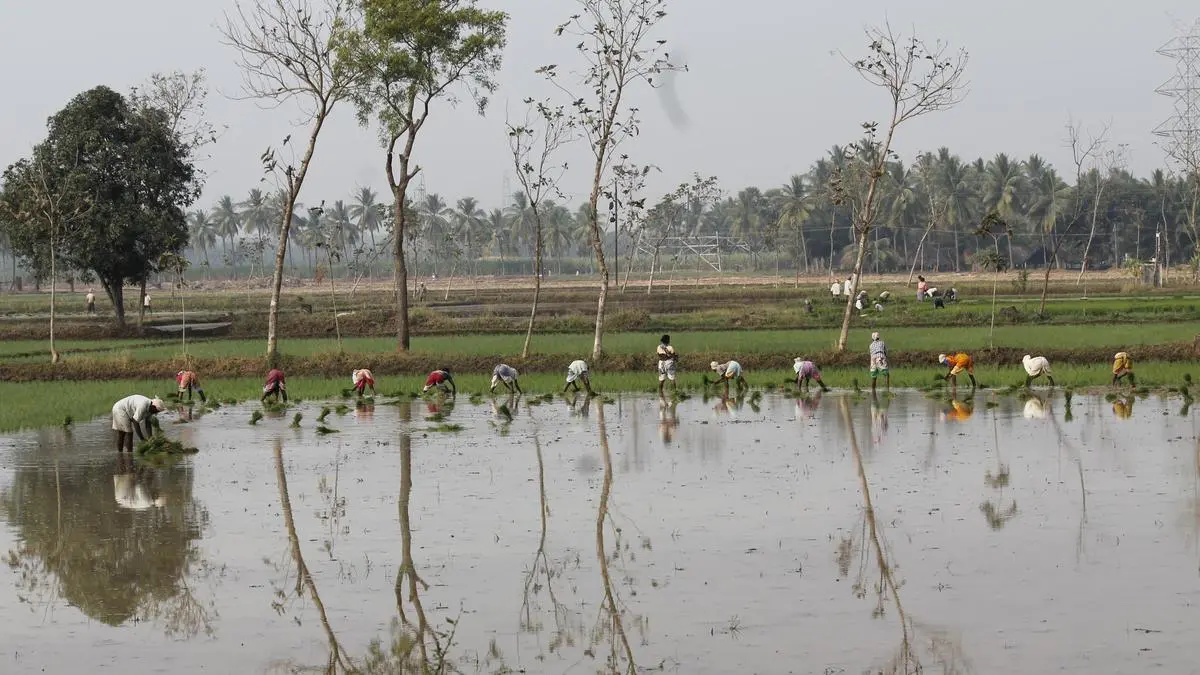
In Maharashtra, about 45 per cent of the rabi sowing has been completed, as the season started on a sluggish note with sowing across major crops significantly trailing.
As of November 24, only 25.99 lakh hectares have been brought under rabi cultivation (45 per cent) of the State’s average rabi sowing area of 57.80 lakh hectares, according to official data.
The slowdown is visible across all major crop categories. Total rabi cereals, which normally cover 30.66 lakh hectares, have so far been sown on only 13.46 lakh hectares—less than half of the usual area.
Pulses, another key component of the winter cropping cycle, have reached just 12.35 lakh hectares against an average of 26.44 lakh hectares, reflecting a 47 per cent coverage.
Foodgrain, which typically occupies the largest share of the rabi basket, shows similar trends. Against a norm of 50.90 lakh hectares, actual sowing stands at 25.69 lakh hectares, marking only 50 per cent progress.
The situation is most concerning in the oilseeds segment: only 0.18 lakh hectares have been sown so far, compared with the average of 0.70 lakh hectares.
Slow pace
Agriculture department officials attribute the slow pace to a combination of factors—moisture stress following a delayed monsoon withdrawal, staggered kharif harvests, and uncertainty among farmers over soil conditions. With sowing windows narrowing for several crops, the shortfall raises concerns about production levels in the upcoming season.
The acreage is expected to pick up in the coming weeks as weather conditions stabilise.
Water Storage
All dams in the State — small, medium and large — currently hold 91 per cent water storage, up from 85 per cent during the same period last year. Except for the Nagpur and Konkan divisions, all other regions have more than 91 per cent storage, ensuring sufficient water availability for the Rabi season.
Published on November 28, 2025
