

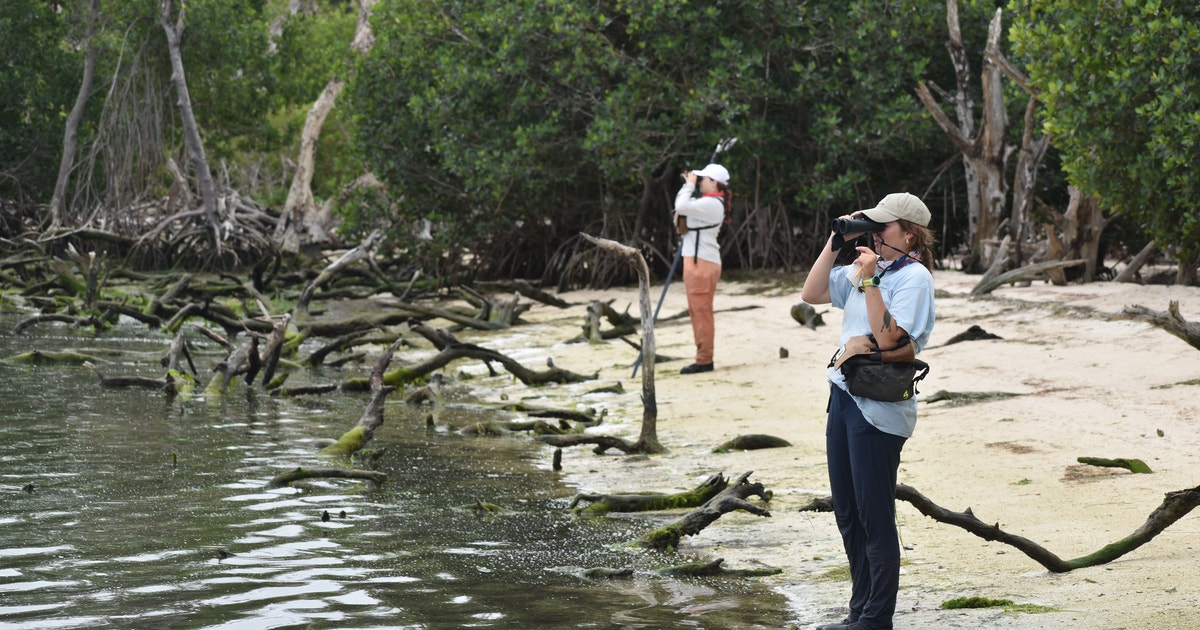
With a loud splash, Shauna Sayers drops the anchor, then plops the first kayak into the shallow waters around Sandy Key in Florida Bay. Sayers, a wading bird specialist at Audubon’s Everglades Research Station in Tavernier, makes regular visits to this island and 62 other keys each spring to monitor the nesting efforts of wading birds. One species in particular, the Roseate Spoonbill, is targeted because it can tell us about the health of the Everglades ecosystem.
On any given day, Sayers expertly captains a small vessel, loaded with kayaks, other gear, and a small team, through a maze of channel markers denoting shallow waters, no-wake zones, and seasonal no-entry zones established by the National Park Service. It is a one-hour-and-fifteen-minute boat ride to this remote island where a variety of birds stop to rest during migration, roost overnight, or raise their families.
“We had a total of 42 spoonbill nests here this year,” says Sayers, “and we come back every seven to ten days to monitor chick development through 21 days of age, after which point, if at least one chick is still alive, the nest is considered a success.” Nesting season for Roseate Spoonbills is wrapping up, but other birds are just getting started.
From the island, the sounds and smells of birds waft on a light breeze. The team, which has permission and permits to do this work, uses the kayaks to cross the shallow flat that effectively protects this place from unauthorized boat access. They hear squeaky calls of Red-winged Blackbirds, twittering warblers, and guttural squawks of Tricolored Herons from deep inside the mangrove-covered key. Sayers and Senior Biologist Kaliegh Schendler ready their gear while Seasonal Research Assistant Alli Mallouk begins recording all bird species observed on her datasheet.
Carefully walking through the maze of mangrove prop roots and squishy mud, Sayers spots the first nest. She watches for any signs of adult or young birds before extending her telescoping mirror to peek inside. That nest is vacant, but at the next nest, a young Reddish Egret begins to stir.
“We have one chick at stage two,” calls Mallouk. Schendler trains her zoom lens on the gangly young bird peering down at her as she swats away a horde of biting insects.
They continue on to record a total of 31 species, with Double-crested Cormorants, Ruddy Turnstones, and Tricolored Herons the most numerous. They also recorded twelve “young-of-the-year” Roseate Spoonbills.
As a critical indicator species for Florida Bay and the Everglades, Roseate Spoonbills have been at the heart of Audubon’s wading bird monitoring program for decades. Because these birds rely on specific conditions, especially water levels, to be able to feed and raise their families, their nesting success or failure is used to judge the results of Everglades restoration as well as the impacts of climate change.
Habitat loss—made worse by the escalating impact of climate change—is driving bird declines throughout the hemisphere. In addition to dedicated Roseate Spoonbill studies, the team also documents nesting efforts of Tricolored Herons in partnership with the National Park Service.
Audubon’s Everglades Research Station shares data collected on all wading birds with a variety of partners for the purpose of restoring and protecting the River of Grass. These efforts help ensure that we understand which areas are most critical to bird population success, the threats those areas face, and how we can best safeguard the health and longevity of those habitats while respecting the needs of local communities.
