

August 2026 – Week 4
By Evan Meikle
Last updated: 18 August 2026
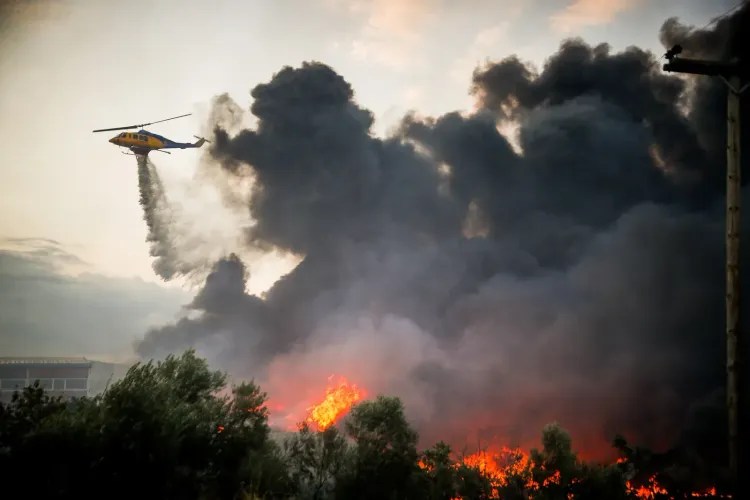
This week’s live blog continues in our coverage of extreme heat and wildfires from across the globe. It will, in particular, take a look at the devastating ecological effects of these emergences as they progress and become ever more frequent.
With the return of El Nino warming global temperatures and disrupting our climate, and droughts and wildfires burning through large parts of Europe and North America, the world’s ecosystem is undergoing considerable pressure, damage, and change.
We will follow events relating to wildfires and extreme heat as they develop and emerge with daily updates, case studies, and analysis on the effects that an ever-warming globe can and are having on its ecological makeup.
Last week’s live blog can be found here.
Key developments we are tracking this week:
- The environmental cost of another week of European wildfires
- Over 100 active wildfires ongoing in British Colombia, Canada
- Updates from UNCCD COP17 on extreme heat and desertification
Latest
Tuesday 18th of August 2026
12:30 GMT
Wales: The South Wales Valleys are home to some of the nations most striking natural scenes and diverse plant and animal life. Small, semi-rural towns mark thin stone streaks across otherwise green and open mountain ranges that extend from the urban southern costal plains of Swansea, Cardiff, and Newport to the southern border of the Bannau Brycheiniog National Park.
However, as wildfires, deliberate or otherwise, have become annual occurrences in the region, residents have noticed a marked difference in the mountain’s physical appearance, as the vegetation that emerges from the blackened hillsides is changing.
In place of the diverse ecological makeup that occurs naturally in these habitats, repeated and intense burns allow more fire-resistant species such purple moor-grass and bracken to dominate and monopolise the region’s natural spaces. This is detrimental to the area’s ecosystem which is dependent on the species of moss and heather that support a sustainable and diverse habitat. One that has only begun to meaningfully regenerate in the decades since the end of major industry in the Valleys.
The other major ecological consequence is the familiar peatland problem, as confirmed by Nick Thomas of Natural Resource Wales who predicts that peat uplands incinerated by this year’s fires could take hundreds of years to recover.
He described the following in a BBC Wales report:
“I would expect this to probably be the worst year for wildfires perhaps we’ve ever had. If a fire burns into the soil and incinerates the soil… then you’ve lost hundreds of years worth of soil. So it’s going to take hundreds of years really for that vegetation to come back in a similar way to what it was.”
Areas of South Wales will have their ecosystems semi-permanently damaged by these wildfires with many habitats, including those of ground nesting birds, reptiles, and rodents completely destroyed, killing their inhabitants in the process.
12:00 GMT
Wales: After four weeks and 14 fires across South-eastern Wales, the region now contains the highest concentration of wildfires anywhere in the UK at present.

In response, UK Prime Minister Andy Burnham approved the dispatch of 100 military personnel including military engineers and members of the Queen’s Own Gurkha Logistic Regiment (QOGLR) on 14 August to provide practical and logistical support to the local fire service.
Despite this, the South Wales Fire and Rescue Service (SWFRS) continues to report that their are combatting 14 wildfires across the valleys south of Bannau Brycheiniog National Park. At present the location of these fires include Ebbw Vale, Blaenavon, Porth, Treherbert, Penrhrys, Van Road, Garth, Merthyr Tydfil, Tredegar, and Pontllanfraith and cover thousands of hectares of land cumulatively, with the major incident in Blaenavon having burned more than 4,000 hectares alone.
This comes amidst four weeks of drought and high temperatures in the otherwise lush and wet region with only around 5mm of precipitation during July and the local reservoirs at a low 61% capacity. These factors have set the conditions for wildfires to ignite and grow at a pace extremely difficult to control or prevent.
Whilst the issue of arson is prevalent here, with four arrests made regarding the fire in Porth, the conditions created by over a month of dry and hot weather has been pivotal in the spread and emergence of the wildfires as major national incidents.
Monday 17th of August 2026
23:30 GMT
Belgium: The reserve’s peat bogs are playing a key role in the challenges to firefighting efforts.
Formed by trapping dead vegetation in waterlogged and carbon-rich soil, peatlands are unusual and typically highly bio-diverse landscapes that are vital to local and global ecosystems.
Whilst peat bogs can help capture C02 and cool the climate, if they are damaged, the carbon contained within is released into the atmosphere, directly fuelling climate change and warmer temperatures.
Therefore, as the High fens wildfire reaches its peatlands, the flames may continue to smoulder beneath the surface without any simple means to extinguish them. As a result, the immense amounts of carbon sequestered there could burn silently for months or even years after the rest of the blaze has been extinguished.
Globally, damaged peatlands are estimated to emit around 1.9 gigatonnes of C02e annually, resembling around 5% of all greenhouse gas emissions despite only occupying 0.3% of land.
This illustrates the disproportionate environmental impact of this wildfire, relative to its burnt surface area. Therefore, the protection of peatlands such as this is vital to efforts in finding natural means of carbon capture. With around 40% of High Fens nature reserve containing peat, the potential carbon emissions as a result of this fire could be significant.
How destructive this particular fire will be is unknown at present. However, if the fire burns deeply enough, the long-term effects will be felt by a physically altered habitat and an environment less suited to combating the progress of climate change.
23:00 GMT
Belgium: In the High Fens nature reserve on the nation’s German border, Belgium is currently experiencing its largest wildfire in modern times.
Beginning on Friday 14 August, the blaze has already burned through roughly 3,000 hectares of Belgium’s largest national park, destroying swathes of protected land, home to a diverse range of plant and animal life.
However, it is the very diversity of its landscape that has made combating this wildfire so difficult. Many parts of the reserve currently affected are prohibitively difficult to access for heavy firefighting vehicles. Particularly, its peat bogs and pine forests have significantly restricted the firefighters’ movement.
This has forced authorities to narrow the method of their response in some areas to aerial efforts, with neighbouring countries Sweden and Germany offering mechanical support.
Despite overnight rain in recent days, the core of the fire remains uncontrolled with the region’s terrain as a significant barrier to success.
This live blog tracks significant wildfire and extreme heat developments and their ecological implications across the globe and will be updated as the situation changes.
For the latest data on active wildfires, extreme heat, and the wider 2026 wildfire season see our Climate monitoring dashboard, and Globe wildfire monitor.
Where appropriate, individual updates may link to more detailed coverage of significant fires or developments.
Discover more from A greener life, a greener world
Subscribe to get the latest posts sent to your email.
