

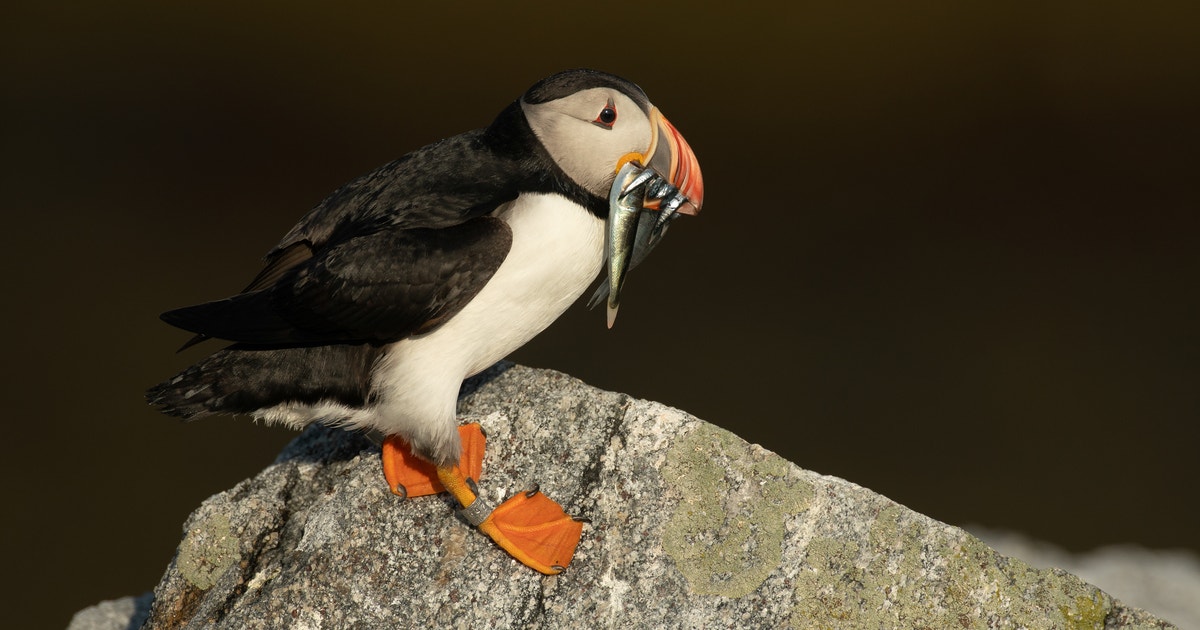
The Northeast Canyons and Seamounts Marine National Monument protects unique deep-water canyons and corals, and is a critical foraging habitat for seabirds, particularly Atlantic Puffins during the dead of winter. Audubon was instrumental in uncovering that populations of Atlantic Puffins rely on this monument to stock up on fish in winter months. This discovery helped establish the monument and draw its boundaries to adequately protect Atlantic Puffins and other seabirds. Since that time, Audubon and partners have continued to document the importance of this area to seabirds, including Leach’s Storm-petrels, some of whom forage within the monument boundaries to feed their young while nesting in Maine.
The Atlantic Coast’s only marine monument is once again open to commercial fishing, a change that could potentially threaten important fish species and make seabirds more susceptible to being hooked or netted. The monument is home to a number of diverse fish species of all ages and sizes, many of which migrate to coastal waters, benefitting seabirds in and beyond the monument. Seabirds thrive when there are sufficient smaller fish to eat—forage fish and/or juvenile fish—and safe spaces to forage. A reduction in forage fish in the monument would force seabirds to travel farther and expend more energy to find their meals and feed their young.
Since 1950, 70 percent of seabirds have declined on a global scale from threats due to harmful fishing practices, variable and diminished forage fish populations, contamination, oil spills, habitat disturbance, and more. Seabirds need spaces in the ocean that are protected from these threats, so they can thrive for centuries to come. Rolling back fishing protections in the monument further threatens seabirds, rather than helping restore populations at risk.
Maintaining protections for this coral habitat far out in the ocean actually benefits fishermen because it allows fish populations to thrive, and spill out into areas closer to the coastal harbors that are more easily accessible by boat. Much like national parks and monuments on land, protecting some ocean areas from harvest can make wildlife more abundant in areas where harvest is allowed.
Additionally, as ocean temperatures increase and the ocean becomes more acidic, monuments like this one help maintain abundant marine wildlife populations. For seabirds specifically, changing environmental conditions threaten every step of their life cycle—from sea level rise drowning nesting islands to ocean warming causing their prey to move deeper and further north. While ocean acidification and warming is still present within their boundaries, monuments help maintain seabird and other wildlife populations by offering a refuge free from other harmful threats.
Continued protection of this important monument will benefit seabirds, strengthen commercial fishing, and safeguard its unique underwater canyon habitats. Audubon will continue to provide the science-based data that demonstrates how protecting the monument is beneficial for the birds and fishermen who rely on this region.
