

By Daniel Cressey
Environmental strain is growing in a region already vulnerable, leaving some countries with little capacity to cope.
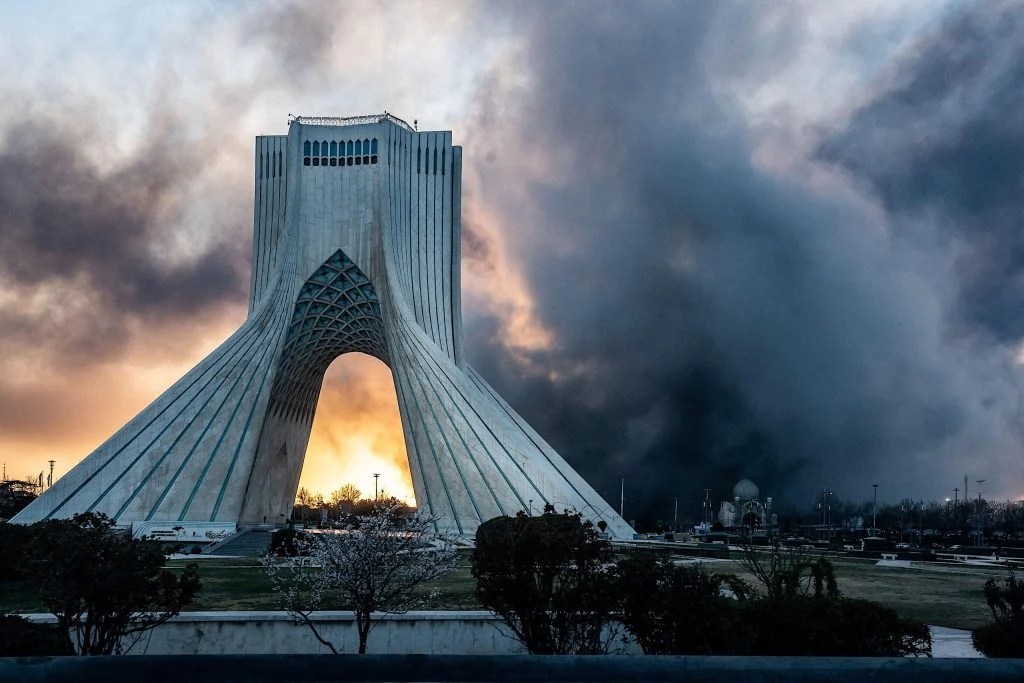
On 28 February, the latest escalation between the US, Israel and Iran moved from threats to open strikes, plunging the Gulf region into crisis. Missiles have hit military and strategic targets, and governments across the region are scrambling as the risk of wider war grows.
The immediate costs are evident. Senior figures, military personnel and civilians have been killed. The arc of violence is widening. Missiles and drones streak the skies over the UAE, Bahrain, Lebanon and Kuwait. Families are hunkering in their homes as air defences flare and explosions echo around cities.
But the damage isn’t restricted to people and politics.
“The picture is very concerning. Thus far, our monitoring has identified that a wide range of environmentally problematic sites have been targeted by conflict parties, in particular fossil fuel and military facilities,” says Doug Weir, director of the Conflict and Environment Observatory, a UK-based non-profit.
Experience from past conflicts shows that pollution, contamination and ecological stress can persist long after the missiles stop flying.
On the 3rd of March, Weir’s observatory said it had identified 120 “incidents of environmental harm” related to the conflict in Iran, Iraq, Israel, Kuwait, Jordan, Cyprus, Bahrain, Qatar, the UAE, Saudi Arabia and Oman.
“History also suggests that those countries in the region with fewer resources and weaker environmental governance will struggle to address conflict-linked harm and the risks that it poses to people and ecosystems,” says Weir.
Oil infrastructure under fire
Few regions are as closely tied to fossil-fuel production as the Middle East. Energy infrastructure is an inevitable target in times of war, raising the prospect of major spills and pollution.
During the 1991 Gulf War, hundreds of oil wells were destroyed. Hundreds of thousands of tonnes of oil and gas went up in flames. Millions more were leaked, some deliberately, in what was widely classified as an act of war.
Thirty-five years later, Qatar’s state-owned energy firm has suspended all LNG production, citing Iranian attacks on its facilities. A major Saudi Arabian oil refinery has been damaged by drones being intercepted nearby, according to the country’s official press agency. Oil tankers have already been struck in the Gulf, with at least one crew member reported dead. The US president, Donald Trump, has boasted of the US sinking several Iranian navy vessels.
Any strike – or accidental damage – to refineries, storage sites or tankers risks fires that degrade air quality, the contamination of water supplies and harm to fragile marine ecosystems.
Animal populations in the Gulf are already under immense pressure from decades of extraction and coastal development, compounded by rising temperatures. Oil spilt in the Gulf during the Iran-Iraq war of the 1980s has been linked to “nearly total annihilation” of its hawksbill population and “a major portion” of its green turtle population.
“Looking back to the Iran-Iraq War, and the targeting of tankers and production sites, it’s reasonable to be concerned about oil pollution in the coastal and marine environment,” says Weir. The International Atomic Energy Agency (IAEA) has also warned of regional risks linked to sites holding nuclear materials. “In both cases,” Weir adds, “the region’s capacity to respond to incidents will be limited for the foreseeable future, potentially increasing their severity.”
Military contamination and nuclear risks
The conflict raises concerns about contamination from weapons and nuclear sites in a region still grappling with the chemical legacies of earlier wars.
Explosions disperse metals and other contaminants that can harm human health. Strikes on military facilities can release additional hazardous substances – including explosives residues, heavy metals, per- and polyfluoroalkyl substances (PFAS), and, in the case of rocket and missile sites, toxic propellants. US officials have said Iranian missile facilities have been among the targets. And fires triggered by strikes are likely to worsen air quality in cities already struggling with pollution.
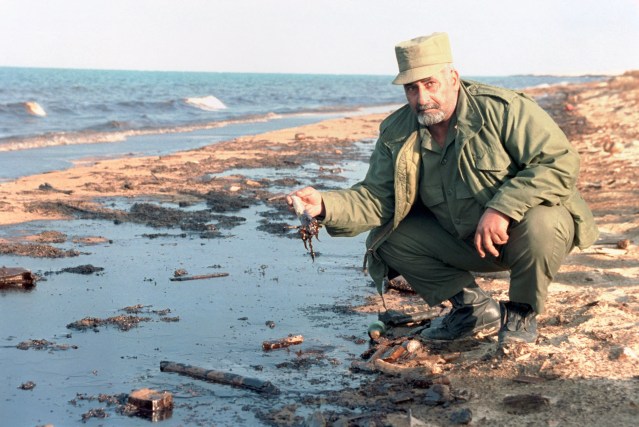
Studies have found links between cancer and other health problems and the depleted uranium rounds used in Iraq and other conflicts, for example. A 2010 study found that 12 years after the Gulf War, oil residues along Saudi Arabia’s coasts remained harmful to bottom-dwelling life, with recovery expected to take decades.
Iran’s nuclear armament is a major premise of the current iteration of the conflict. Trump has claimed a primary objective is to destroy Iran’s ballistic-missile capabilities and ability to develop nuclear weapons. Israel and other Middle Eastern states struck by Iranian counterattacks also host nuclear sites, raising fears of potential radioactive release if facilities were hit.
As of the 2nd of March, no elevated radiation levels had been detected in countries bordering Iran “so far”, said the director general of the International Atomic Energy Agency, Rafael Mariano Grossi. The agency had “no indication” that Iranian nuclear sites had been struck. But, he warned that “the situation today is very concerning. We cannot rule out a possible radiological release with serious consequences, including the necessity to evacuate areas as large or larger than major cities.”
The carbon cost of conflict
In the long term, the conflict may have wider environmental impacts.
Militaries are among the biggest fossil fuel users in the world. The US military is,, by some accounts the largest institutional emitter on the planet. Work on the conflict in Gaza estimated that the first 120 days produced more emissions than did 26 individual countries and territories in a year.
Shipping companies are rerouting vessels to avoid the Middle East, sending ships around the tip of Africa rather than risking the Suez Canal route through the Red Sea, where Iranian-linked forces have attacked shipping in the past. This makes the route significantly longer for ships travelling from the Indian Ocean to the Atlantic. Vessels attempting to recover lost time may sail faster, burning more fuel and emitting more carbon.
Disruption of the Suez Canal can push up the carbon footprint of ships by nearly 50%, according to a 2024 modelling study. While the UN’s trade and development body UNCTAD suggests that a round trip from Singapore to northern Europe would have 70% higher emissions if it went via the Cape of Good Hope.
The issue extends into the skies. While many flights have been cancelled due to the closure of Gulf airspace to civilian planes, longer-term rerouting may drive up emissions. After the invasion of Ukraine, the closure of Russian airspace to many carriers increased global aviation emissions by 1% in 2023, according to one study.
The Gulf conflict has sent oil prices surging, with the Strait of Hormuz – through which huge amounts of oil travel in tankers – shut down. In response, oil-producing countries in the OPEC group have said they will increase supply to help mitigate the closure of the strait.
In some ways, the case for renewable energy is being made in real time. “Decentralised systems are harder to manipulate through supply chokepoints. Solar panels, once installed, generate energy locally,” wrote Hussein Dia, a researcher on transport and sustainability at Swinburne University of Technology in Australia, in the Conversation. “The vulnerability shifts from ongoing fuel imports to upfront manufacturing dependence,” he added.
Pre-existing environmental strain in Iran
Some Gulf states have invested heavily in environmental science and resilience. Saudi Arabia has plans to plant millions of trees by 2030 and protect large areas of its sea. Oman has made a large commitment to mangrove restoration.
But Iran entered this conflict with deep ecological vulnerabilities and limited capacity to respond.
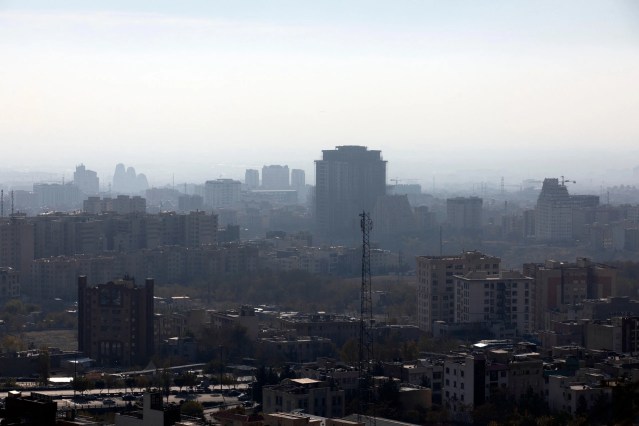
The country was already struggling with air pollution and water shortages. It is a key example of the concept of “water bankruptcy”, according to work done by leading UN expert Kaveh Madani, published this year. Madani argues that the word “crisis”, which means a temporary deviation from the baseline, is insufficient to describe the world’s water systems. These are now chronic, and baseline conditions have been eroded.
Iran has pulled so much water from the ground that it has caused subsidence. Yet usage is still so high that shortages are common and supplies sometimes run out at night in major cities, according to reports. Air pollution is thought to cause thousands of deaths every year, and Tehran is regularly declared one of the world’s most polluted cities.
Some have linked these environmental problems – especially water issues – to the upswell of popular protest in the autocratic regime in the recent past.
The current conflict is likely to compound those pressures. Damage to infrastructure, pollution from strikes and constrained state resources could leave environmental recovery low on the list of post-war priorities.
A growing body of research suggests that addressing environmental harm after conflict is essential to long-term stability. The latest fighting risks not only worsening ecological degradation but also weakening the institutions needed to repair it.
In a region already strained by climate change and resource scarcity – and in a world bound together by energy markets, shipping lanes, and shared ecosystems – the environmental consequences of this war are already crossing borders.
Richard Milburn, who researches armed conflict and the environment at King’s College London, believes those consequences and reconstruction efforts must be part of the conversation. But he finds it “highly unlikely” these will occur outside “the environmental sector echo chamber”. He calls this “the enduring challenge for those of us concerned about the environment”.
First published in Dialogue Earth.
Discover more from A greener life, a greener world
Subscribe to get the latest posts sent to your email.
Categories: Analysis, climate change, conflicts, Energy, environment, Geopolitics, impacts, Middle East
