


Ryan Haines / Android Authority
Most manufacturers don’t make their own phones. There are exceptions, of course, with Samsung being the most well-known, but others just get an EMS (Electronics Manufacturing Services) provider that handles assembly. Some even go a step further and partner up with an ODM (Original Design Manufacturer) that not only makes their phones but designs them as well, inside and out.
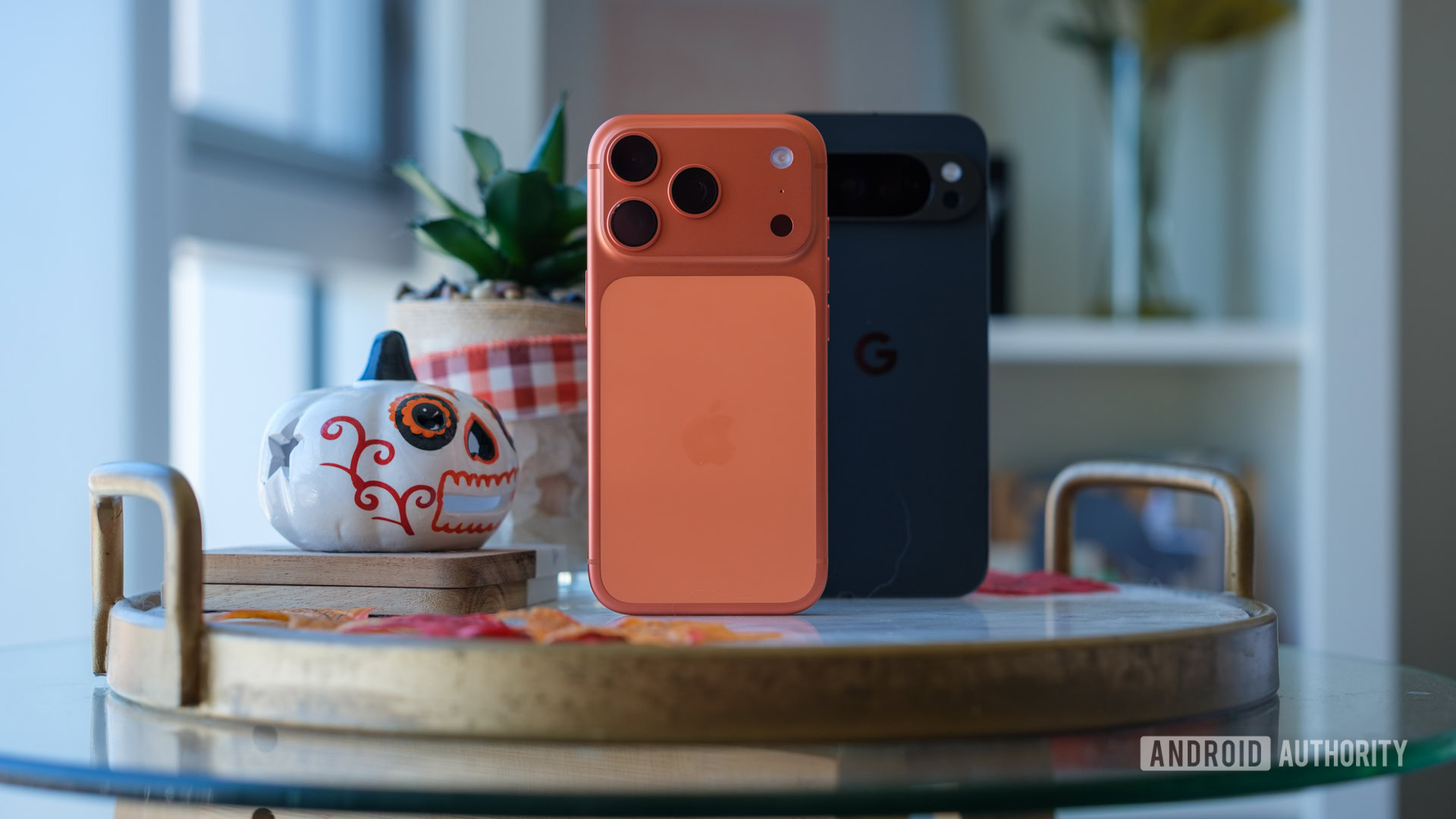
Google and Apple don’t go that far. Both design their own phones, and they even design their CPUs. But they don’t make a single phone since neither of them has any factories set up. They both work with an EMS provider, which actually happens to be the same one in some cases.
Did you even know that Apple and Google don’t make their own phones?
0 votes
But why is that? One could argue that it would make more sense for both companies to handle manufacturing on their own for more control and higher margins, but the story isn’t as simple as it may seem on paper. Here are five reasons why the two giants — and most other smartphone brands — don’t make their own phones, and why that’s unlikely to change anytime soon.
1. The economics don’t always make sense
Rita El Khoury / Android Authority
The truth is that most phone brands don’t sell enough phones for an investment in their own factory — or factories — to make sense. We like to talk about Pixel phones a lot in the tech community since they are great phones owned by a big brand, but the reality is they don’t even crack the top five globally in sales. Investing in a factory makes more sense for a company like Apple since it sells a lot more across its product portfolio, but there are other issues holding it back.
For Apple and Google, building their own factory in a country other than the US would be a PR nightmare. It’s not something that politics and a lot of US consumers would be happy about. But building a factory in the States comes with a lot of financial implications that are hard to overlook.
Don’t want to miss the best from Android Authority?


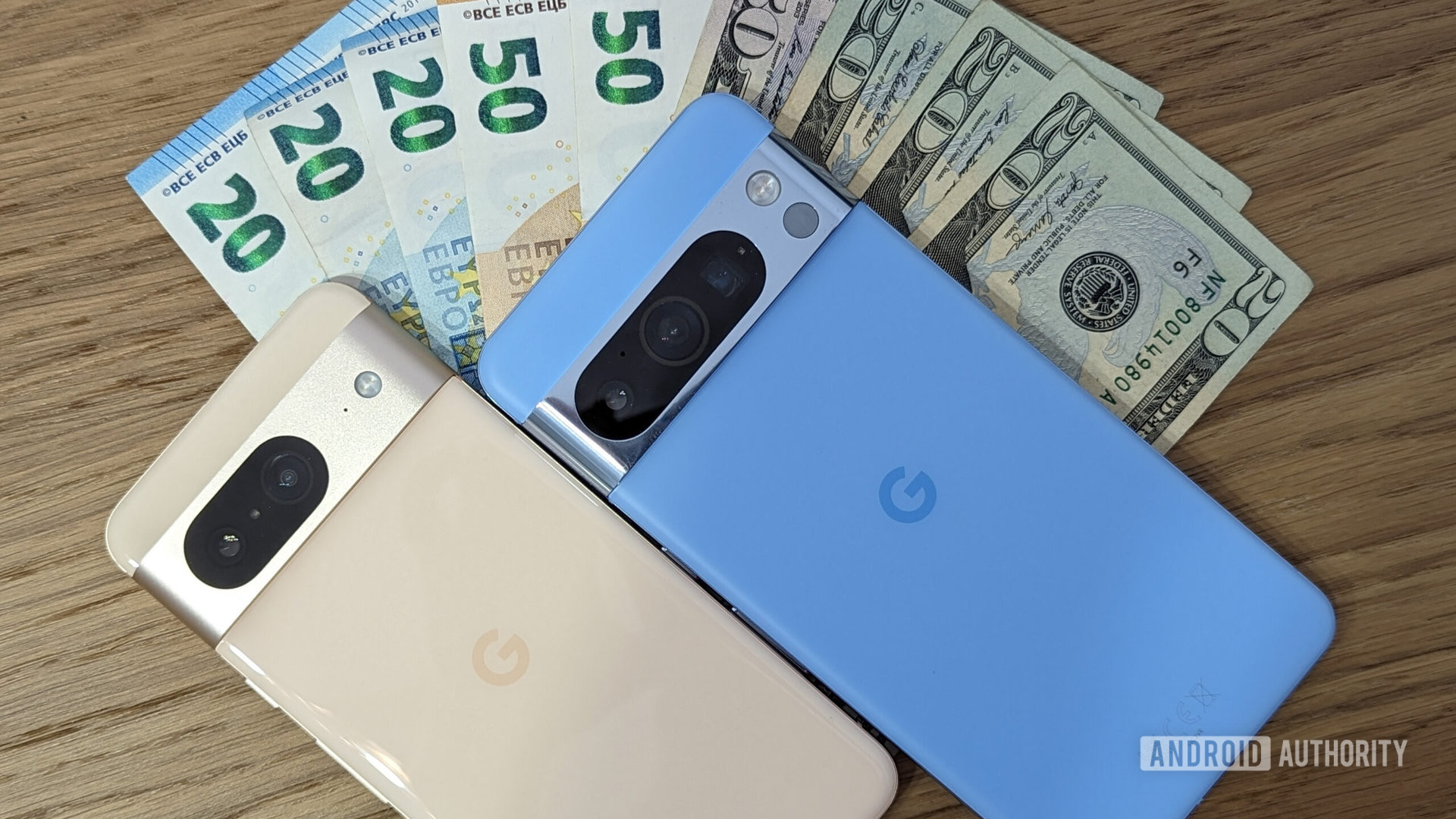
It’s costly to build and run a factory since the workforce is a lot more expensive in the US than in Asian countries. To keep the same margins, Apple and Google products would likely have to be more expensive, which can hurt sales, while keeping prices the same will lower revenue. The latter is something shareholders won’t appreciate. Not to mention that all those investments in building a factory will lower the profit as well, which will have an effect on the stock price.
It seems that it’s cheaper for both Apple and Google to manufacture in Asia despite paying another company to do it — more on this later. And until that changes, they don’t have a reason to set up factories on their own soil.
2. It’s extremely risky
Aamir Siddiqui / Android Authority
Risk management is key in business, especially when selling phones globally. That’s why most companies make phones in different countries. For example, Samsung has factories set up in South Korea, Vietnam, India, Indonesia, and Brazil.
While it may seem like overkill, it actually makes a lot of sense. Manufacturing in just one factory, for example, is the riskiest thing a large company could do. A natural disaster, like an earthquake or a man-made mistake, that causes severe damage to the facility can shut down production completely. So can a workers’ strike.
Manufacturing in multiple factories in one country is a better solution but still risky since that country can get in the middle of a trade war (or an actual war) like the one we’re seeing now with the Trump administration. All of a sudden, a company can be hit with tariffs when exporting to specific key Western markets. That can dramatically increase the price of their products, making it that much harder to compete with rivals from other countries not affected by the trade war.
So from this perspective, Apple and Google would have to build not just one but multiple factories across the globe to minimize risk. It’s cheaper and faster to partner with various EMS providers and then move production easily from one location to another based on the current political landscape and other factors.
Product demand is not constant throughout the year, and that’s harder to manage on a smaller scale.
Then there’s product demand. It’s not constant throughout the year, as it skyrockets around the holiday season and during product launches. It’s hard for any company to manage this on its own on a smaller scale, especially if it doesn’t have a clear expectation of what the future holds. A drop in sales means the factory is underutilized and workers have to be let go, while a significant increase in demand requires more people and production lines.
That’s why manufacturing is often centralized, as it’s more efficient. A company like Foxconn, for example, doesn’t just make iPhones and Pixels. It also makes computers for some of the world’s most recognizable brands, gaming consoles for Sony, Microsoft, and Nintendo, and a lot of other popular electronics. With that scale, it can manage the issue of demand more easily since it can always take on new clients if orders from current ones decline. It can also hire and fire more easily and faster to keep up with demand and not get a big backlash from the public, since Foxconn likes to keep a low profile and not many people even know it exists.
Additionally, Foxconn has manufacturing campuses set up with multiple facilities on the same lot to separate production by product and sometimes by brand as well. It’s something that companies that produce products under their own brand don’t do. Samsung, for example, has the single biggest factory in the world with everything under one roof. By having multiple buildings instead of just one, Foxconn minimizes its risk, as it can rent out any of the buildings it’s currently not using if demand for its services falls. It’s harder to rent out a part of a factory, for example.
3. It’s very expensive and difficult to set up
Robert Triggs / Android Authority
As you can imagine, setting up a single factory is a big investment. And as already discussed, Apple and Google would ideally need multiple ones in different countries to keep up with demand, avoid possible import fees and taxes in certain cases, and just generally minimize risk.
That requires a substantial investment. You need land, machinery, and a lot of people, not only to build the factories but to run them as well. And as already discussed, it doesn’t even make a lot of sense for companies like Google that don’t sell a lot of phones, or generally for phone brands that have limited sales potential.
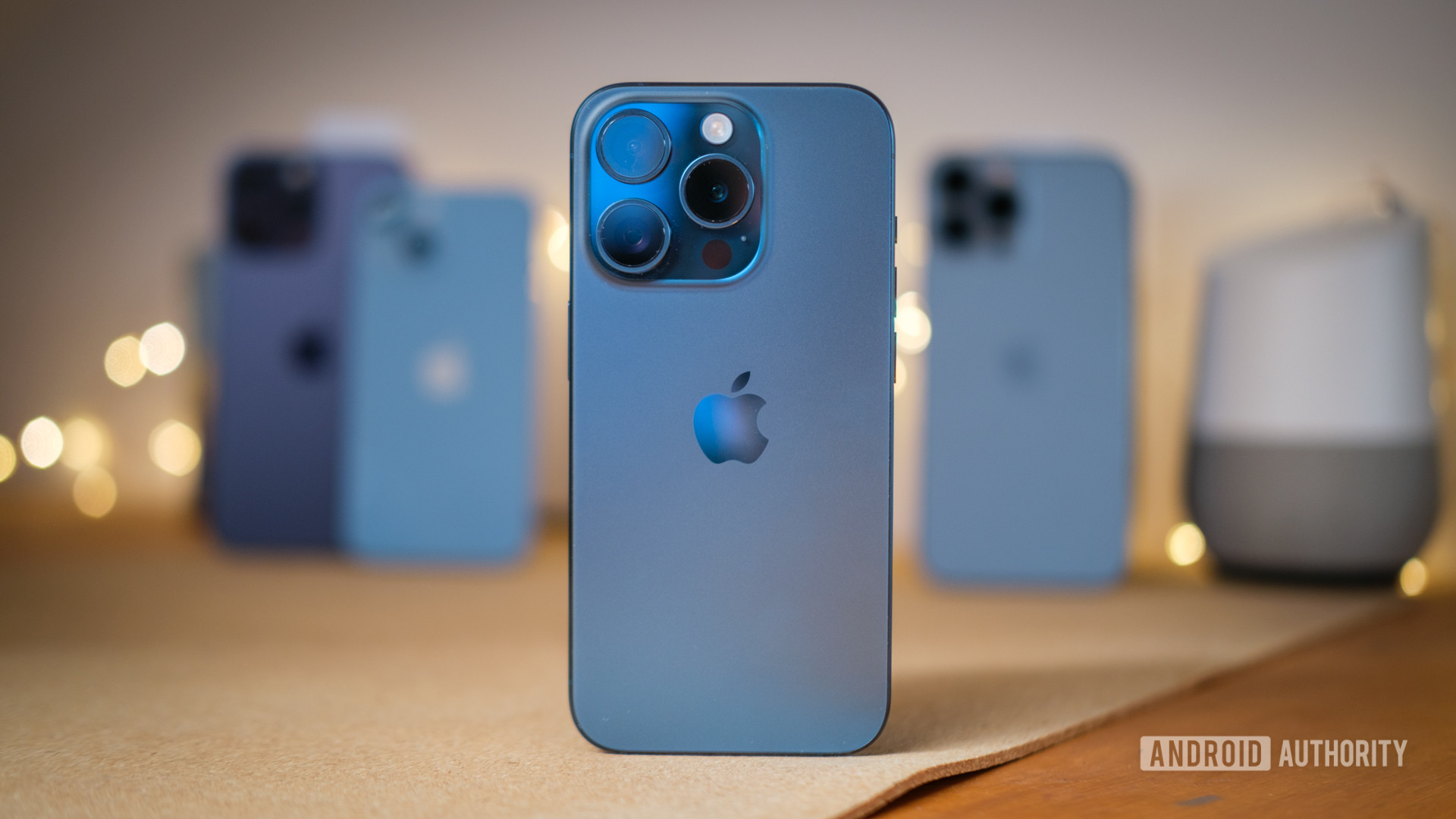
Apple is an exception here, but the massive investments it would have to make would be hard to justify. The truth is that making the phone — the assembly that Foxconn handles — isn’t as expensive as people think. It only accounts for a fraction of the iPhone’s retail value. Speaking to the Wall Street Journal, Wayne Lam, a research analyst at TechInsights, said that assembling an iPhone in China costs Apple $30, while other sources claim the number is even lower. To make the phones in the US, the price per unit could go from $30 to as much as $300, which just goes to show that making phones on their own soil isn’t economical for Apple and Google.
Building a factory in Asia is not as straightforward as it may seem.
Well, why not just build factories in Asia, then? That’s a fair question, but nothing is as easy as it seems at first glance. As already mentioned, investing in a foreign country by building a factory there would be a PR nightmare for both Apple and Google, but that’s only half the story. Politics plays a far bigger role here. Like it or not, it’s a lot easier for a local company to build a factory or expand its production capabilities in places like India and China than it is for a foreign one. Politics and big business go hand in hand, and local players will always have an advantage for several reasons, with one being that a bigger chunk of money stays within the local economy.
Then there are relations between countries. One could argue that it is a risky move for US corporations like Apple or Google to build a factory in a country like China during a time of tension and trade wars. Once you build a factory, you can’t move it overnight. If relations sour, that billion-dollar facility can become leverage in a worst-case scenario. The host country can impose sudden regulations or even seize assets in extreme cases, effectively holding the company’s investment hostage. Politics and big business can be brutal at times.
4. They just want to focus on their core business

Ryan Haines / Android Authority
It’s easy to say that Apple and Google should build their own factories; it’s another thing to actually do it. Let’s be real: what exactly do these two companies know about building and managing factories? They have never done it, and it’s not like the people they have on their payroll know how to do this. They would have to expand into a whole new field and substantially increase the number of employees.
Apple and Google focus on design, software, sales, marketing, customer support, and everything else that comes with it. They would rather focus on what they do best and leave the manufacturing to the professionals who actually know what they are doing.
They don’t call China the world’s factory for nothing.
Apple’s CEO Tim Cook once said that the reason why iPhones are made in China is not just financial, but is about skill as well. China is a manufacturing powerhouse. They don’t call it the world’s factory for nothing. They already have the necessary infrastructure set up, and manufacturing products that contain a lot of parts, like phones, for example, is easier in specific locations. Shenzhen is a great example of this, which is known as the “Silicon Valley of Hardware.”
There are just so many product and component manufacturers in a place like Shenzhen that it makes the process of making things that much easier and faster. This phenomenon is known as an Industrial Cluster. The proximity allows for incredible speed; if an engineer needs a new screw or a prototype mold, they can often get it from a supplier down the street in an hour rather than waiting weeks for international shipping. It’s an ecosystem that is very hard to compete with.
In business, it’s usually a lot more efficient to focus on what you can do best and outsource everything else. And in the case of making smartphones, it can also be cheaper and less risky.
5. They can’t be blamed directly

Rita El Khoury / Android Authority
Manufacturing in India, China, and many other countries has had its share of controversies over the years. We’ve heard everything from accusations of child labor and general exploitation to low wages and even suicides, which are things big and reputable brands like Apple and Google want to distance themselves from.
Whenever something like that happens, it doesn’t directly involve them since they technically don’t own or run those factories. If those factories were owned by them, the story would be very different. It’s basically a PR nightmare that hurts the company’s reputation and can translate into a massive sales drop. People are more forgiving if they hear about these stories connected to Apple’s or Google’s manufacturing partners instead of the companies themselves.
It’s the same reason why bars and nightclubs often outsource security. If a security guard crosses the line, the venue can shift responsibility to the security firm since the security guard isn’t their direct employee. It limits their legal liability and also doesn’t hurt their reputation as much. It’s sad when you think about it, but that’s the reality of the situation.
Thank you for being part of our community. Read our Comment Policy before posting.

