


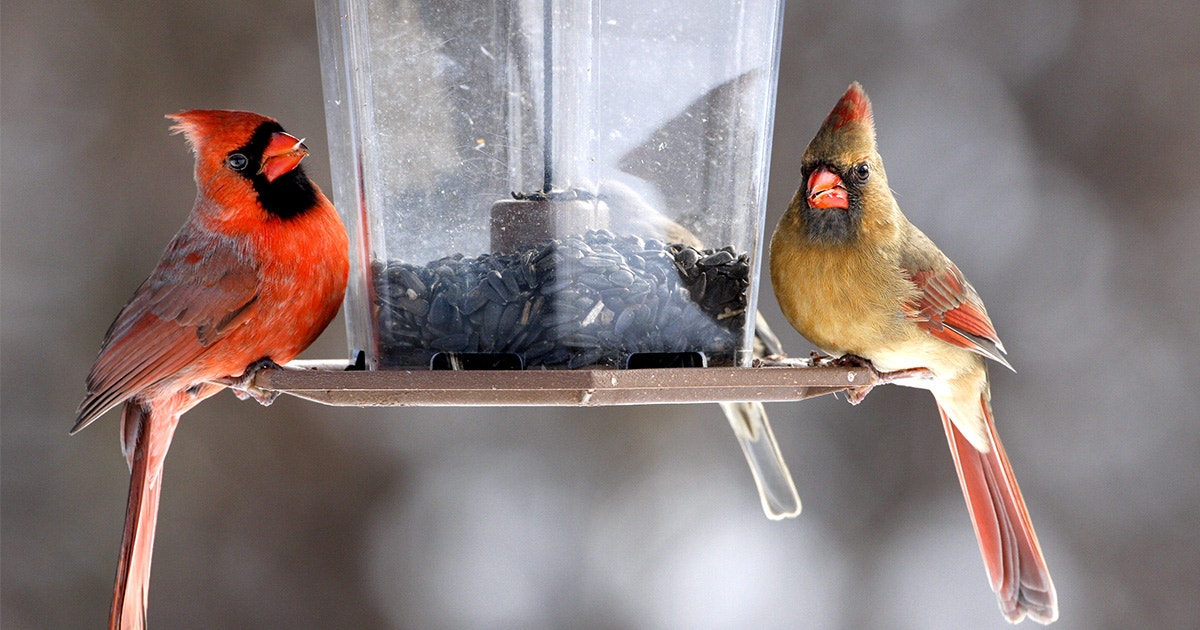
Who doesn’t love a Northern Cardinal? The appeal of these abundant, widespread songbirds is undeniable: They brighten drab winter days with a pop of bright red. Weeks before spring, they’re among the first birds to herald its arrival with their ray-gun songs. And all year long they are a cheerful presence, chirping and bopping around a variety of habitats.
Found across the East and parts of the Southwest, crimson males and understated reddish-brown females alike will readily visit bird feeders for an easy meal. In fact, bountiful food from backyard feeders may be one reason the species has been able to expand its range northward over the past century.
So, how can you entice Northern Cardinals to your space? That’s one of the questions that Eli Haislip, manager of The Wood Thrush Shop in Nashville, receives often from customers. “Fortunately, cardinals are one of the easiest birds to attract to your feeders,” he says. “They’re not picky at all.”
Cardinals will gladly eat peanuts, cracked corn, and suet, but your best bet is to offer black oil sunflower seeds. These are not only a top favorite for Northern Cardinals, but also offer the most bang for the buck to attract a variety of birds, Haislip says. Keep your feeders stocked with these nutrition-packed seeds and you can also expect to see Black-capped Chickadees, House Finches, Tufted Titmice, White- and Red-breasted Nuthatches, and more.
Cardinals will gladly eat peanuts, cracked corn, and suet, but your best bet is to offer black oil sunflower seeds.
While Northern Cardinals have a varied diet—berries, flowers, buds, and insects are all on the menu—they seem to have a real taste for sunflower seeds. One study found that, after black oil sunflower, their next-favorite feeder fare is striped sunflower seeds, followed by sunflower chips. Cardinals will also gladly nibble on safflower seeds, which are also a favorite food for the lovely Evening Grosbeak.
Feeding cardinals well is key to keeping them around, but that’s not all they need. A water source, such as a fountain or birdbath, will go a long way to make them feel at home. If winters regularly dip below freezing where you live, a heated birdbath is a good option.
To help Northern Cardinals find shelter around your home, consider building a brush pile—a simple way to turn downed tree limbs, pruned branches, and used Christmas trees into five-star wildlife hotels. You can also help cardinals and other birds find nesting material and plenty to eat by leaving your yard a bit messy, including by leaving dead leaves where they fall and not cutting coneflowers, goldenrods, and other perennials whose seedheads provide birds with meals all winter.
If you’re lucky enough to have cardinals make a home alongside yours, be sure to do what you can to keep them safe, including making your windows visible to them and cleaning your feeders and birdbaths regularly. That’s more than a fair tradeoff for all the joy these gorgeous birds bring.

