


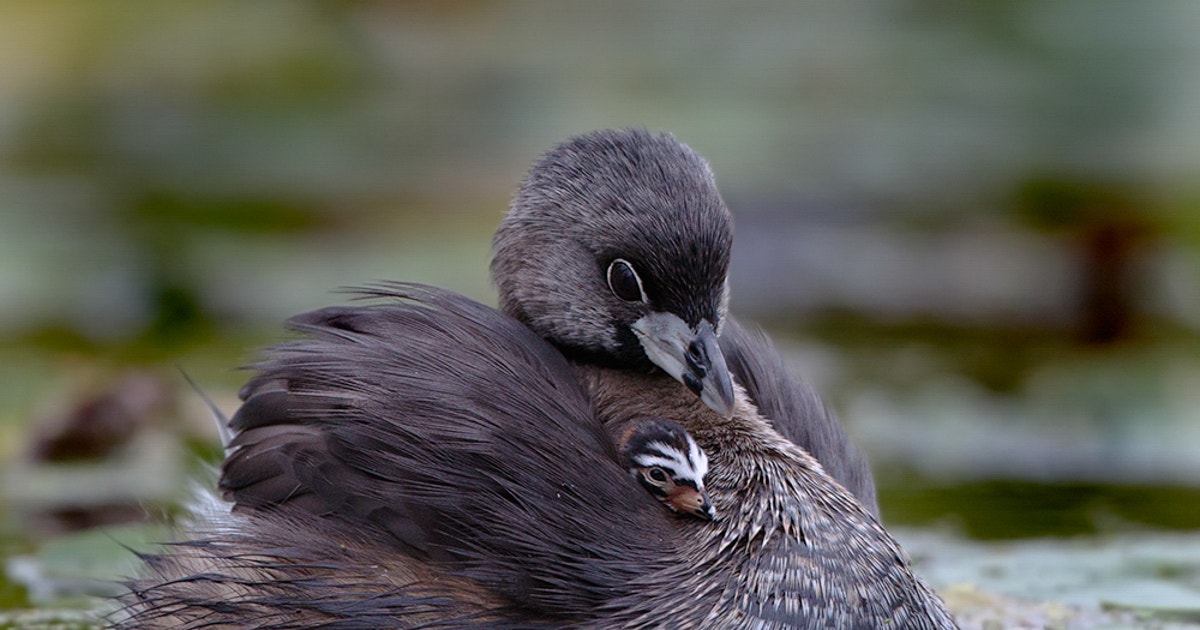
Did you know that different species of marsh birds need different water levels within a wetland to thrive? Marsh Wrens, for instance, need plants that cluster together in shallow marshes to anchor their nests. American Bitterns need a mix of open water and plants to hide and hunt. And Pied-billed Grebes need open water for diving and foraging.
As great masters of disguise, secretive marsh birds are rarely seen due to their coloring and preference to stay hidden. Wetlands are their habitat of choice. But as more than half of original wetlands have been lost across the Great Lakes region, many marsh bird populations have experienced steep declines.
To address these declines, we’ve identified twelve nearshore regions of the Great Lakes that need our help the most, and we’re working within them to restore the wetland habitat that birds need. This work takes a dedicated team of scientists, researchers and conservationists to understand the unique needs of marsh birds and find solutions that work for them. Assessing how high or low water is in a marsh and adjusting it to meet the needs of marsh birds is an important part of this work.
When water levels drop, marsh birds generally tend to suffer. Low water levels can shrink habitats, impact food availability and create conditions for invasive species to thrive. Unnaturally high water levels also impact birds. High water can wash away nests and kill local plant life.
A healthy marsh that supports different marsh species has three zones:
- Shallow Marsh: Shallow water with dense plants
- Hemi-marsh: A balanced mix of open water and plants
- Deepwater marsh: Large areas of deep, open water with some aquatic plants
Due to development and fragmentation, many wetlands have lost their natural ability to fill and drain, and as a result water levels are often too high or too low. A changing climate is also impacting water levels. Over the last decade, Great Lakes water levels have swung rapidly. In 2014, water levels in Lake Michigan were near historic lows. By 2020, water levels reached an all-time high, and between 2021-2026, water levels dropped again due to “flash droughts” that have plagued areas within the watershed.
We’ve identified a solution. At sites across the Great Lakes region, we’ve worked with partners to install water control structures. These cement box-like structures operate like a gate or dam. By adding and removing boards, land managers can raise or lower water levels to help encourage native plant establishment or aid in invasive species management.
To assess water levels within wetlands, we place tall pole-like devices, called water level sensors, within them. Each spring, our team visits the sensors to drop the recording devices back into the water after thawing. We’re then able to monitor water levels throughout the spring and summer breeding season and the fall and adjust them as needed.
In the Calumet region, one of our priority regions, we’ve placed water level sensors at six sites in Chicago’s southeast side where we’ve done restoration work, including Big Marsh Park and Powderhorn Lake Forest Preserve.
Understanding water levels is critical to helping marsh birds thrive. Through tools like water control structures, and water level sensors, we can create healthy marsh habitat to help their populations rebound.

