

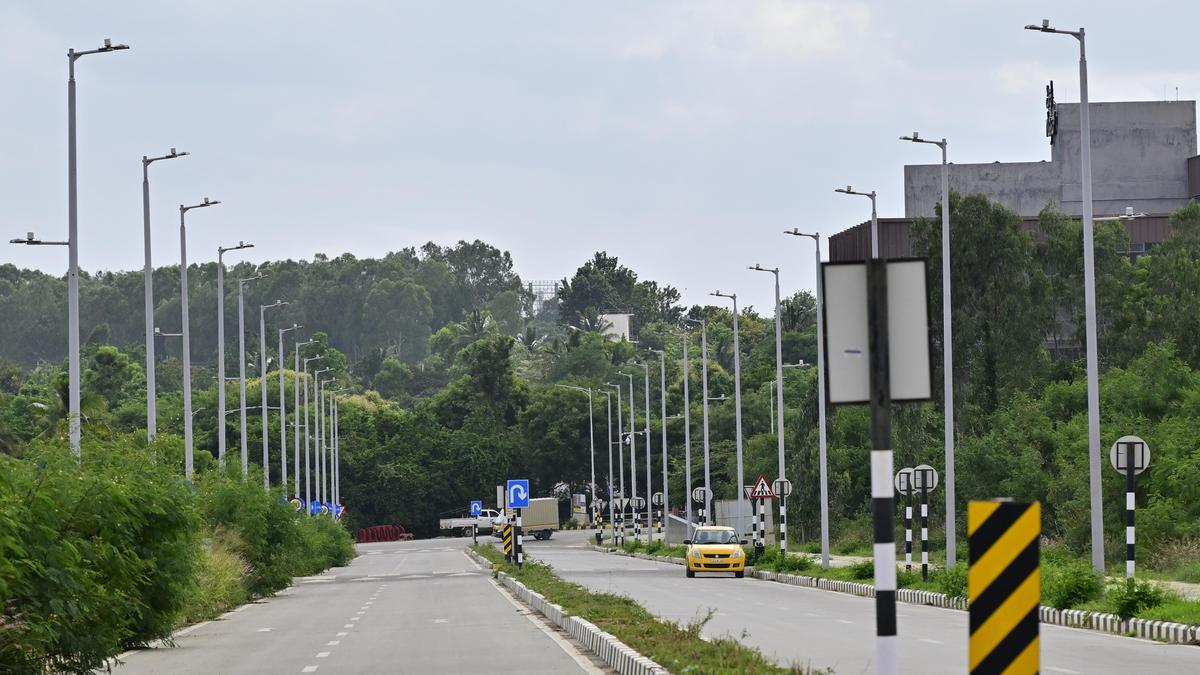
Once a retirement paradise known for its mild climate, Bengaluru is now feeling the heat.
With summer intensifying, the city recorded a maximum temperature of 36 degrees Celsius in April, according to the India Meteorological Department (IMD), while the average minimum temperature rose to 23.55 degrees Celsius. The rise in night-time temperatures, experts say, is particularly concerning.
“The worrying factor is that the minimum temperature has gone up, and the duration of heat has extended,” said Viswanath Srikantaiah, founder of Rainwater Club. He attributes this trend partly to the urban heat island effect.
Adding to this, experts say the shift is becoming more visible on the ground. “The heat arrived much earlier and was sharper this year; you could feel it, even in the surge of air conditioner use across the city. While annual variations will continue, the overall trajectory in a business-as-usual scenario is clearly upwards in terms of rising temperatures,” said Jaya, Director, WRI India.
A 2025 study titled Urban Heat Island in Bengaluru: Built-up Growth and Temperature Trends highlights the scale of the shift. Between 1973 and 2023, the city’s built-up area expanded by 1,055 per cent, leading to an 88 per cent loss of vegetation and a 79 per cent decline in water bodies. This has contributed to a 7.9°C rise in land surface temperatures, establishing a clear link between rapid concretisation and increasing heat.
“We are compounding climate change by over-concretising the city,” said urbanist V Ravichandar.
Water outlook, and rainfall concerns
Despite lingering concerns over water shortages, fuelled by last year’s crisis, there is no immediate cause for alarm. According to Srikantaiah, the city has sufficient water supply at least until the first week of June, supported by expanding distribution networks.
Groundwater depletion, he noted, tends to be seasonal and localised. “In some pockets it remains a concern, but overall, it is not a city-wide issue,” he said.
On rainfall, forecasts remain uncertain at a micro level. While the IMD expects rainfall to be below the long-period average, Srikantaiah said even modest monsoon showers should be sufficient to replenish reservoirs and avoid a crisis.
However, experts caution that long-term sustainability will depend on better water management. “We are extracting more water than our aquifers can replenish. Expanding piped supply alone won’t solve this, Bengaluru needs a multi-pronged approach, including recycling and reuse, and more sustainable water management, especially in areas beyond the municipal network to ensure reliable and climate resilient water supply,” Jaya added.
However, the city’s infrastructure remains under strain, particularly when it comes to handling intense rainfall. Anything over 50 mm/hour peak rainfall, the area is doomed. Old design standards remain at 75 mm/hour peak rainfall, while data in the last few decades show enough instances of 125 mm/hour peak rainfall in Bengaluru. We need to revise our stormwater drainage design. according to Ravichandar.
The city recently recorded 111.5 mm in a single day in April- an all-time high for the month, triggering flooding in several areas. Peak rainfall over the past decade has reached 125 mm, he added.
Ravichandar noted that such volumes would be manageable if spread out over a longer duration. “It’s the intensity within a short span that creates problems,” he said.
He emphasised the need for greater focus on water conservation and recharge. Measures such as rainwater harvesting, restoring open wells, and increasing permeable surfaces can help replenish aquifers and mitigate shortages. “We need to move towards a sponge-city approach, which is fundamentally anti-over-concretisation.,” he said.
Meanwhile, the Bengaluru Water Supply and Sewerage Board (BWSSB) is set to launch an AI-powered water management hub under Cauvery Stage V. The system aims to improve monitoring and management of both drinking water supply and sewage networks.
(The writer, Adithya Lalgudi is an intern with businessline)
Published on May 3, 2026
