


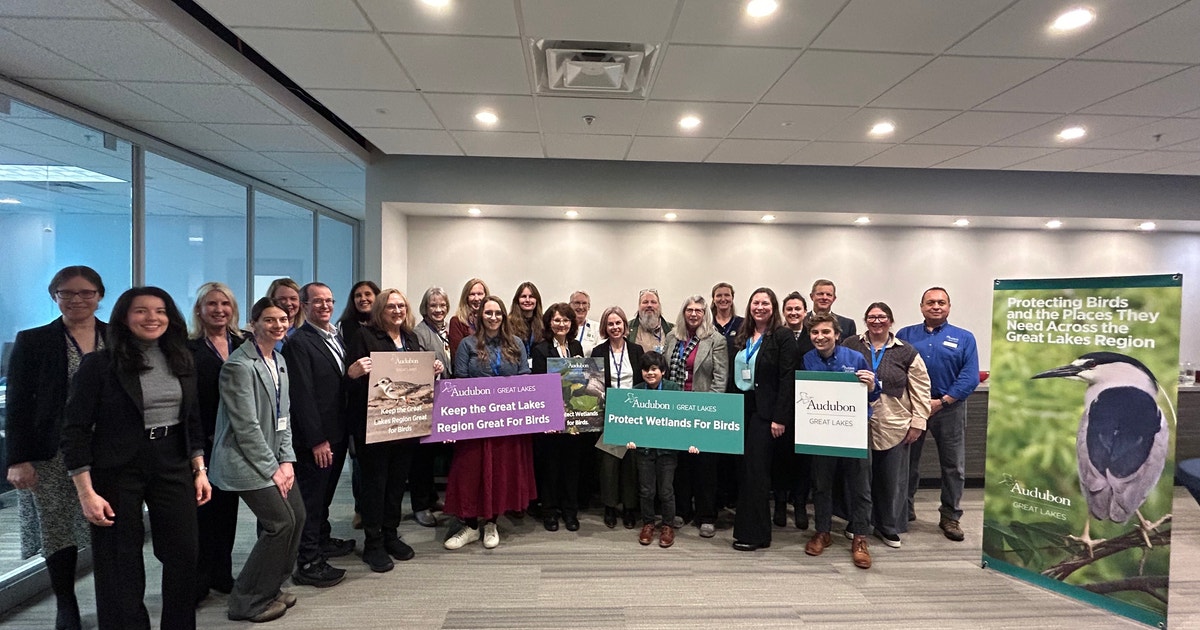
LANSING (March 11, 2026) – Today, Audubon members, community leaders and policy experts gathered at the Michigan State Capitol to raise awareness of the threats facing birds, hear from leading voices, and meet with state lawmakers. Together they shared opportunities to protect wetlands and other habitats birds need and expand renewable energy solutions that are planned with birds in mind.
The 2025 State of the Birds report, published by a coalition of science and conservation groups, shows that U.S. birds are declining sharply across a range of habitats. Michigan has lost 50 percent of its historic wetlands, and the Black Tern—a species that depends on wetland habitat—has lost nearly 99 percent of its state population since 1966 and was added to the state threatened and endangered species list in 2024.
“The risk to Michigan’s birds if we fail to act are profound. The good news is that by taking action now, we can protect vulnerable species—while delivering solutions that benefit people and communities,” said Marnie Urso, Senior Policy Director for Audubon Great Lakes. “Thank you to the Audubon members who traveled from all across the state today to meet with their lawmakers and share why protecting Michigan’s wetlands and advancing renewable energy—quickly and responsibly—is so essential for the future of birds and this state.”
Audubon advocates met with more than 17 state lawmakers to share their stories and urge lawmakers to support:
- Robust funding for wetland restoration in the Michigan Department of Natural Resources’ budget.
- SB 276 and SB 277, which would increase permit fees for hunting and fishing licenses and provide essential resources for Michigan’s conservation work.
- Community energy in Michigan to reduce energy costs, increase reliability and expand access to renewable energy.
- Allowing transmission lines to be built safely where there is already development, like near highways.
State Senator John Cherry (D-Flint) and Steve Chadwick, Senior Great Lakes Wetlands Advisor for the Michigan Department of Natural Resources, spoke at the event.
“Whether you’re a birdwatcher, or a hunter or angler—the conservation of Michigan’s great natural spaces is something we can all agree on. Conservation solutions like SB 276 and SB 277, which would make updates to Michigan’s hunting and fishing license fees, will help protect the woods and waters that birds need and Michiganders enjoy,” said Senator Cherry. “Thank you to Audubon and your members for elevating solutions that will not just protect birds but ensure our natural heritage thrives for generations to come.”
“Wetlands are critical habitats for birds, but the consequences of losing these precious natural resources are also felt among our local communities,” said Chadwick. “Wetlands help prevent flooding from damaging Michigan streets and homes, and investing in the protection of these habitats offers priceless returns to Michigan residents in the form of tourism, recreation, infrastructure protection, cleaner water, and quality of life.”
In Michigan, Audubon Great Lakes is also working to directly restore 12,500 acres of habitat in high-priority areas, such as coastal wetlands at St. Clair Flats—home to the world’s largest freshwater delta—and, alongside partnerships, aims to positively impact 129,500 acres across the state.
“We want to thank Senator Cherry and Steve Chadwick for joining us,” said Urso. “Like the canary in the coalmine, birds are often the first to signal changes to our environment. We urge Michigan’s lawmakers to heed their warning and help build a brighter future—one where Michigan birds, and the habitats they depend on, can thrive.”

