


Roseville, Minn. (July 28, 2026) — Earlier this month, Audubon Upper Mississippi River was awarded $840,000 from the Environment and Natural Resources Trust Fund to launch the Adopt-a-Flyway pilot program to incentivize habitat restoration and bird-friendly management across private, public, and Tribal lands in Minnesota. By providing financial and technical assistance, Audubon hopes to empower landowners to recognize the value of their land within the Mississippi Flyway and encourage voluntary action to improve 700 acres of critical migratory bird habitat by 2030.
Since 1970, North American bird populations have declined by nearly one-third due to habitat loss, pollution, climate change, and other pressures. Migratory species represent some of the steepest losses, in part because they rely on a connected network of high-quality habitat to complete their journeys. The Mississippi Flyway is the largest bird migration corridor on the continent, used by almost half of North America’s bird species, and therefore an important focus area for habitat conservation.
“The Mississippi Flyway supports more than 325 bird species during their migratory flights each spring, with the mighty Mississippi River helping them maintain their routes,” said Sarah Hewitt, Senior Conservation Manager for Audubon Mississippi River. “However, the habitats these species rely upon for fuel and rest are declining due to a variety of factors, making it more difficult each year for migratory birds to fulfill their needs during their epic journeys—which leads to population loss and decreased reproductive success if they make it to their breeding grounds.”
Since most bird habitat in North America is privately owned, voluntary recognition programs are essential to addressing the decline of migratory bird populations and achieving conservation outcomes at scale. Audubon created the Adopt-a-Flyway pilot program in Minnesota to incentivize bird-friendly land management and reduce fragmentation in areas identified as critical stopover and breeding habitat for migratory birds.
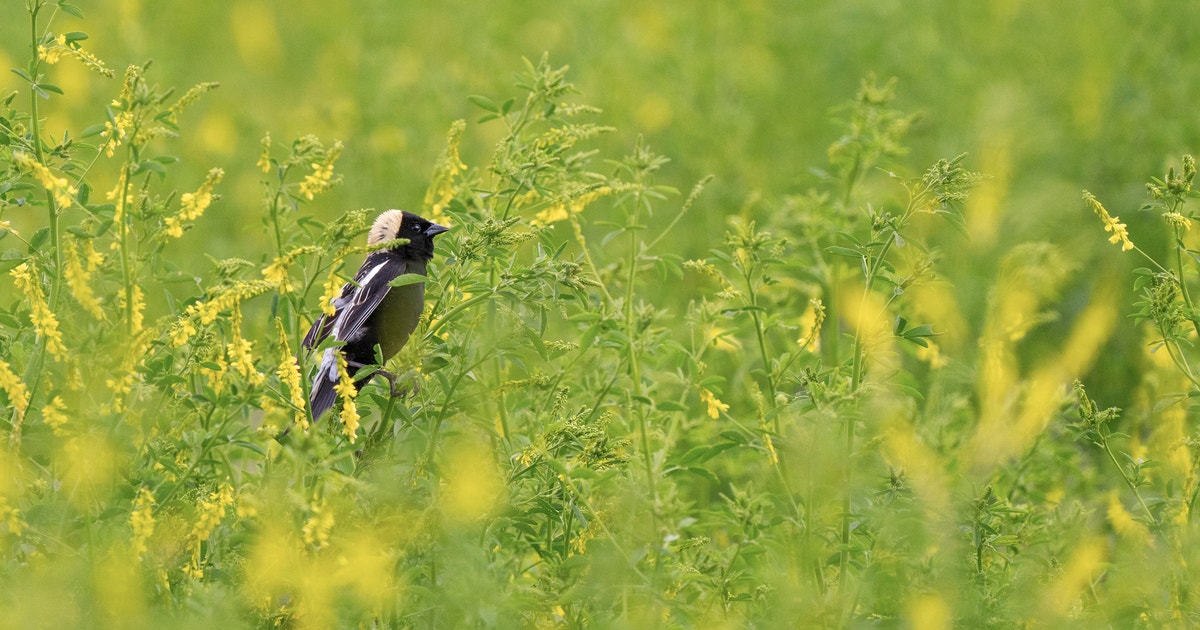
Participants who voluntarily enroll in the program will gain public recognition as well as financial and technical assistance to implement bird-friendly management practices recommended by Audubon range and forest ecologists. These practices may include prescribed fire, native prairie and tree plantings, brush management, and rotational grazing. Audubon ecologists will also use autonomous recording units to assess the program’s impact on target bird species in Minnesota, such as the Bobolink and Wood Thrush.
“We want to see this program uplift the importance of conserving our piece of the Mississippi Flyway to the public and empower landowners to enhance and create habitat that migratory and breeding birds can thrive in,” Hewitt said. “Connected and healthy habitats are key to supporting the bird species that use the Mississippi Flyway.”
Audubon will also support in-person workshops to educate the public on bird-friendly land management alongside partners from MN Grazing Lands Conservation Association, American Bird Conservancy, and Urban Bird Collective.
The official rollout of the Adopt-a-Flyway pilot program in Minnesota will happen this fall, but interested land managers can start reaching out now about enrollment.
For more information about the Adopt-a-Flyway program in Minnesota, please contact Dale Gentry, Director of Conservation for Audubon Upper Mississippi River, at Dale.Gentry@Audubon.org.
The National Audubon Society is a leading nonprofit conservation organization with 120 years of science-based, community-driven impact, dedicated to protecting birds and the places they need, today and tomorrow. Birds are powerful indicators of our planet’s health, acting as sentinels that warn us of environmental change and inspire action. Audubon works across the Western Hemisphere, driven by the understanding that what is good for birds is good for the planet. Through a collaborative, nonpartisan approach across habitats, borders, and the political spectrum, Audubon drives meaningful and lasting conservation outcomes. With over 1,000 staff and more than 2.6 million supporters, Audubon is a dynamic and ever-growing force committed to ensuring a better planet for both birds and people for generations to come. Learn more at audubon.org and on Facebook and Instagram @audubonsociety.

