


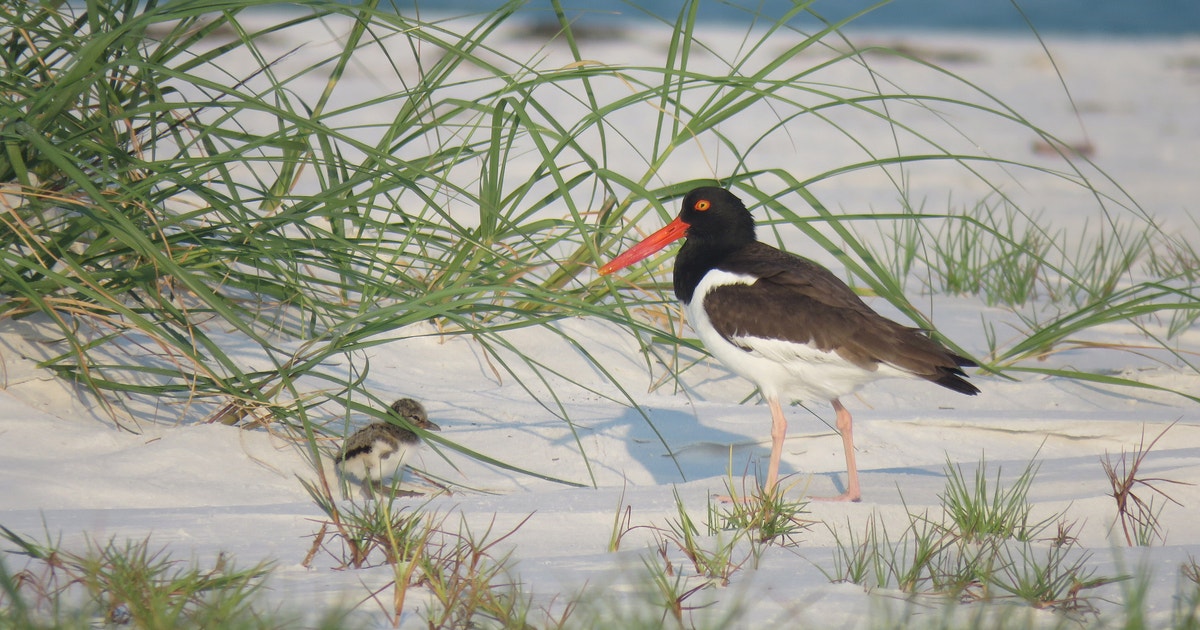
The beach bird nesting season has begun along Florida’s coasts. Spring and summer mark critical times of year for five vulnerable species, which must avoid human disturbance, storms, and predators to raise their babies successfully.
Background
Sea and shorebirds lay their eggs right on the sand. They are scared of people and dogs and will take flight whenever boaters, beachgoers, or dogs approach too closely. Repeated human disturbance often causes adult birds to abandon the nesting area, sometimes even leaving eggs and chicks behind. To limit the amount of human disturbance to nesting birds, Audubon staff close off important nesting areas to people while the state-Threatened birds, such as Least Terns, American Oystercatchers, Black Skimmers, Wilson’s Plovers, and Snowy Plovers, raise their families.
Panhandle Nesting Beach Locations
In addition to the year-round closures at Flag Islands and Lanark Reef Critical Wildlife Areas, Audubon staff are working closely with the Florida Fish & Wildlife Conservation Commission to temporarily close other sections of beach for shorebirds until nesting season ends on August 30. These areas include sections of Dog Island, Tyndall Air Force Base, Alligator Point Critical Wildlife Area, and many State Park beaches. The St. George Island Causeway Critical Wildlife Area closure will be in effect from March 1 through September 30 to accommodate late nesting Brown Pelicans.
Why This is Important
Postings often include informational signs, along with string and flagging, placed around areas where state-protected beach birds are known to nest. Staying out of posted nesting areas and giving the birds plenty of space allows them to successfully raise their chicks. Boaters need to heed signage and avoid areas posted as “no trespassing,” even if they don’t notice any birds.
“Bird postings allow visitors to enjoy beaches while making sure to keep safe spaces open for birds. We closed Dog Island just in time, as we are already noticing plover tracks all over the habitat,” says Col Lauzau, Audubon’s Panhandle Shorebird Program Manager.
What You Can Do
How to protect beach-nesting birds so they can raise the next generation of chicks to adulthood:
- Respect posted areas, even if you don’t see any birds inside.
- If birds dive-bomb you, carefully move away as there may be a nest nearby.
- Ensure no trash or food remnants are left behind, as this can attract predators.
- Keep dogs on a leash (if they are allowed on the beach at all), on board your boat, or at home.
Audubon Florida protects birds and the places they need, today and tomorrow. Audubon works throughout the Americas using science, advocacy, education, and on-the-ground conservation. State programs, nature centers, chapters, and partners give Audubon an unparalleled wingspan that reaches millions of people each year to inform, inspire, and unite diverse communities in conservation action. A nonprofit conservation organization since 1900, Audubon believes in a world in which people and wildlife thrive.

