

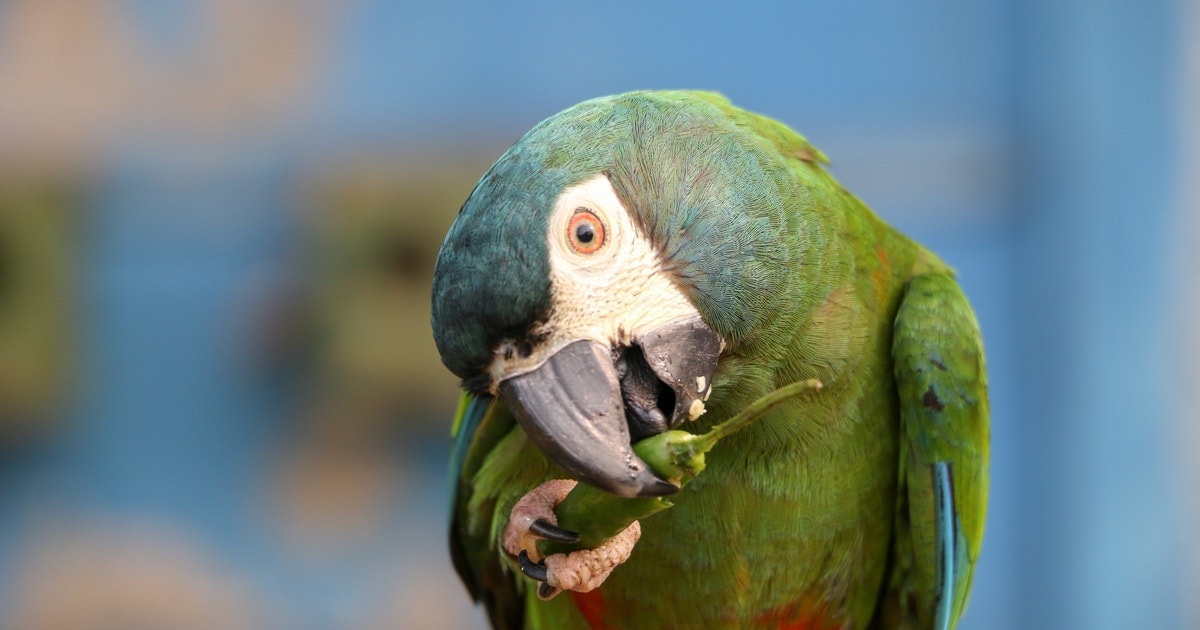
Conventional wisdom has long held that birds are immune to spice. Many a bird blog recommends fending off squirrels by filling feeders with chili pepper-coated bird seed, the assumption being that birds won’t mind. And it makes sense; where hot peppers grow in the wild, birds eat the fruit undisturbed.
In fact, birds are the primary dispersers for pepper plants. The fiery doni sali chili, native to the Mariana Islands, is even named for the species that spreads its seeds—the Micronesian Starling, or Såli. “Peppers depend upon birds for moving to new habitats or to empty open spaces,” says Haldre Rogers, an ecologist at Virginia Tech.
Still, the avian palate may have its limits. Emerging research suggests that, with extremely spicy peppers, even birds feel the heat.
Chilis get their heat from a chemical compound called capsaicin, which serves important functions for the plants. For one, it fends off fungal infections. What’s more, its eye-watering flavor deters most animals from eating up all the fruit. That’s a plus for a plant looking to spread its seeds far and wide, since animal digestive tracts tend to grind them up. Avian guts, however, break down the fruit but leave the seeds intact and ready to germinate when the bird poops them out.
In the wild, peppers tend to max out around 500,000 Scoville Heat Units.
In the wild, peppers tend to max out around 500,000 Scoville Heat Units—extremely spicy, yet far milder than some varieties selectively bred by humans for heat. A ghost pepper, for instance, comes in at a scorching 1 million Scovilles, and some chilis get far spicier still. Biologist Gabriel Colbeck and his students at Maryville University, in Missouri, wanted to understand why wild peppers don’t grow hotter. They suspected birds might lend some insight.
To find out, they put birds to a sort of Hot Ones challenge: They filled feeders with a variety of spice levels, ranging from none at all to 1 million Scovilles, and counted how many Northern Cardinals, Carolina Chickadees, and House Finches visited the feeders.
The birds showed they could handle the spice nature throws at them. But after around 500,000 Scovilles, they started to eat fewer seeds. At the ghost pepper spice level, they refused the seeds altogether. Northern Cardinals, despite their flame-red plumage, had the steepest drop in visits. “When you get to a certain point, birds can actually taste [capsaicin], and they don’t like it,” Colbeck says. His hunch is that, since plants count on seed-spreading birds for their free gardening service, birds’ relationship with hot peppers over centuries could have helped determine just how spicy peppers in the wild get.
The still unpublished results challenge the logic that has been used to explain why birds can eat chili pepper seeds: They simply can’t taste spice. In mammals, the vanilloid receptor, located in the nervous system and gut, connects spice with pain. In birds, that receptor is far less sensitive, earlier studies have shown—but it’s still there, and it will turn on when met with the wrath of a ghost pepper.
“When you get to a certain point, birds can actually taste [capsaicin], and they don’t like it.”
More research is needed to confirm whether it’s taste or some other factor that causes birds’ aversion to extremely spicy seeds. The mixture Colbeck used to coat the seeds could carry other chemicals that influence birds’ desire to eat them, says David Haak, a plant scientist at Virginia Tech. The birds could, for example, be reacting to the overwhelming smell of the seeds coated in hot pepper powder, or to something unrelated to spice.
And beyond birds’ taste buds, there could be other factors that explain why wild chilis only get so hot. For example, producing capsaicin takes up valuable energy that a plant could otherwise use for reproduction or growth; under drought conditions, hot pepper plants produce significantly fewer seeds than their milder relatives, Haak’s research shows.
Another reason for chili plants to hold back on the heat: Capsaicin is a gut irritant that can speed up digestion. If a bird poops out seeds too fast, that’s a drawback, since the plant benefits most if its seeds travel a greater distance from their source. “The mother plant wants to have its seeds go farther,” Haak says.
Colbeck’s findings also upended another assumption: that spice keeps squirrels from stealing bird seed. In his experiments, squirrels would first eat the regular seeds, but would still go back to eat even the spiciest ones. If there’s a choice between spicy seeds and another food source, squirrels will eat something else, Colbeck says. But if they’re hungry, they’ll tough it out.
Besides, Colbeck says, going too spicy with your bird seed may prove counterproductive: “There might come a point where you could actually deter your birds from visiting your feeder.” And how bland that would be.
