


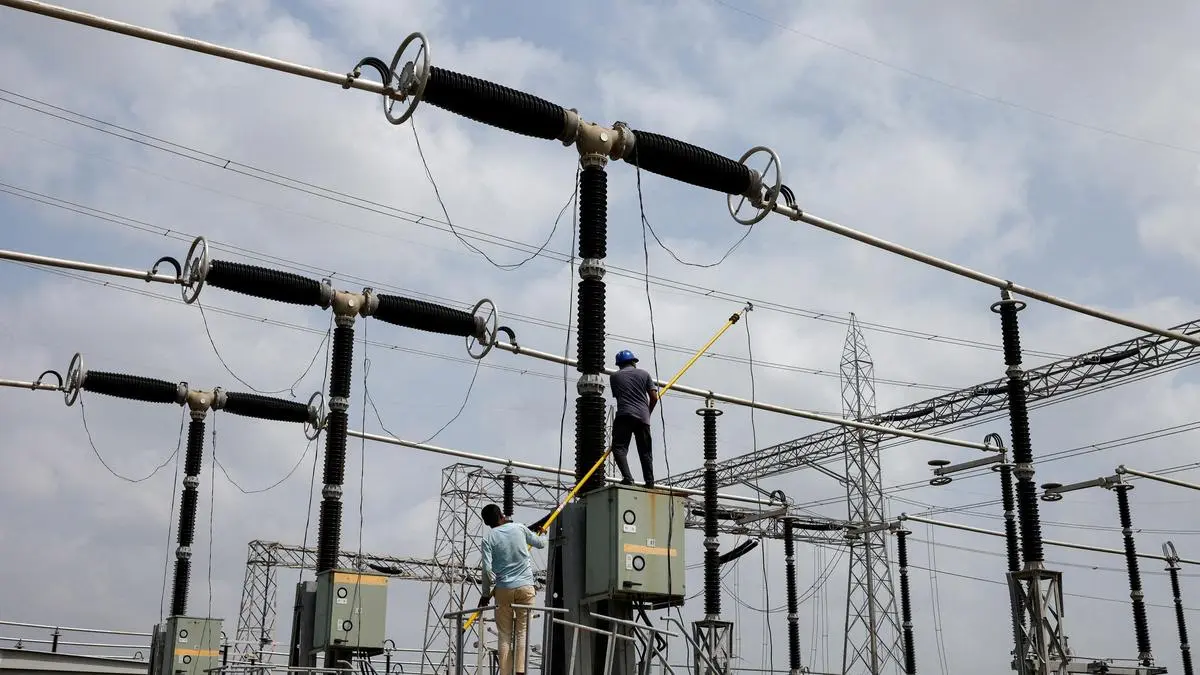


India plans to invest USD 2.2 trillion in its power sector over the next two decades, targeting 500 GW of renewable energy by 2030 and 97 GW of coal-based capacity by 2034-35.
| Photo Credit:
AMIT DAVE
India will require investment of about USD 2.2 trillion in the power sector over the next two decades, a senior official said on Thursday.
India has set a target of 500 GW of renewable energy by 2030 and the addition of 97 GW of coal-based thermal power generation capacity by 2034-35.
The transition ahead will require unprecedented investment. India will require an investment of about USD 2.2 trillion over the next two decades, Union Power Secretary Pankaj Agarwal said, addressing the Bharat Electricity Summit 2026.
India has made a lot of progress in terms of adding power generation capacity, including renewable resources, and distributing, the official noted.
The next phase of growth for India’s power sector will depend on the software side, regulatory frameworks, market design, pricing mechanisms, and institutional innovation.
Empowering farmers and integrating renewable energy
Programmes such as PM-Kusum are already transforming farmers from passive consumers into active producers of energy. However, integrating large shares of in-energy requires new approaches, he said, adding that time of day tariff, demand response, flexible generation, and storage solutions will all play critical roles.
Remarkable transformation of India’s power sector
The secretary said India’s power sector has undergone a remarkable transformation that offers valuable lessons for stakeholders across the world.
Peak demand deficit has fallen sharply from about 4 per cent to nearly negligible levels. Installed capacity has more than doubled to exceed 520 GW. Renewable energy has been at the heart of this growth, particularly since 2016, with tariffs falling significantly.
Policy design and market frameworks driving growth
“This progress has not been accidental. It has been driven by deliberate policy design, standardised bidding frameworks, renewable purchase obligations, and visions that have enabled scale while reducing costs. Today, India is not only meeting its domestically enabled energy leads, but also emerging as a manufacturing and export hub,” Agarwal said.
This raises an important question for all stakeholders here. “Are we ready to treat electricity, not as a static commodity but as a dynamic one, where value varies by time location and demand,” he said.
Future initiatives and international collaboration
Earlier, speaking at the event, Union Power Minister Manohar Lal said India is planning to implement an under-sea power transmission cable network with the UAE as a part of One Sun, One World, One Grid Network.
He further said this is the inaugural Bharat Electricity Summit and will be held every two years from now on.
Growth in renewable energy and household electrification
Union Minister for New and Renewable Energy Pralhad Joshi said, “Our electronic goods, electronic production has increased from Rs 1.1 lakh crore to Rs 11.8 lakh crore, this is more than six times growth.” Minister of State for Power, New and Renewable Energy Shripad Naik said 32 lakh households have been solarised under the PM Surya Ghar Muft Bijli Yojana, of the targeted of 1 crore homes.
“Our renewable energy journey has been remarkable. From just 2.8 GW of solar capacity in 2014 to over 143 GW today, placing India among the global leadership in clean energy. We are now moving beyond the capacity creation towards a system,” he said.
Published on March 19, 2026

