


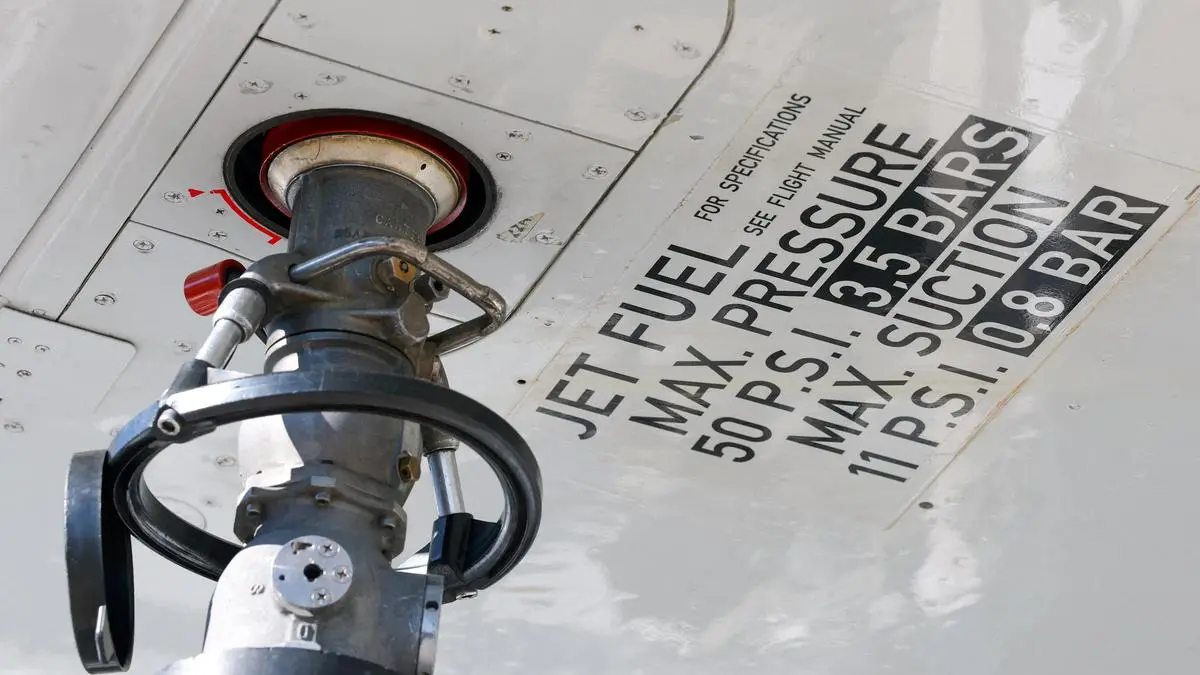


The move forms part of a broader pricing approach aimed at insulating domestic consumers from recent increases in international crude oil prices
| Photo Credit:
REUTERS
The PSU oil marketing companies (OMCs) are currently incurring an under recovery of ₹30 per litre from the sale of aviation turbine fuel (ATF) to airlines.
“Jet fuel prices are determined based on international prices. There is an under-recovery of around ₹30 per litre on domestic jet fuel but this under-recovery is variable based on international prices,” said Sujata Sharma, Joint Secretary in the Ministry of Petroleum & Natural Gas (MoPNG) on Monday.
The conflict in West Asia has squeezed profits of airlines as fuel accounts for their second-largest expense. Analysts expect airlines to face pressure in the short term due to higher fuel costs, longer flight times due to rerouting and a weak rupee against the dollar.
The Ministry emphasised that the crisis in West Asia has resulted in abnormal increase in crude oil prices. To shield consumers, the government absorbed a part of this burden by reducing excise duties on petrol and diesel. Besides, it has reduced the export levy on jet fuel from ₹16 per litre to ₹9.5.
Meanwhile, ATF prices for domestic flights were kept unchanged in the June revision, while rates for international flight operations were reduced, providing partial relief to airlines amid rising operational costs.
Accordingly, State-owned OMCs kept prices unchanged for scheduled carriers in their latest monthly revision on June 1. However, prices for jet fuel used in operating international flights were reduced by $400 per kilolitre.
The move forms part of a broader pricing approach aimed at insulating domestic consumers from recent increases in international crude oil prices.
As per sources, the government is closely monitoring the aviation sector’s operating environment amid concerns that sustained high fuel costs could further impact fares and passenger demand.
Notably, to prevent any substantial increase in expenses, the Central government in April had capped domestic ATF price increases at 25 per cent.
Prices for May had also been kept unchanged.
Recently, in a relief for domestic airline operations, the Delhi and Maharashtra State governments reduced value-added tax (VAT) on ATF.
The government has also removed airfare caps and kept the 60 per cent free seat allocation rule in abeyance to provide airlines greater pricing flexibility.
Additionally, India’s aviation regulator has temporarily eased pilot flight duty time limitations (FDTL) for long-haul flights in response to global aviation disruptions.
Furthermore, the Airports Economic Regulatory Authority (AERA) has directed major airports to reduce landing and parking charges for domestic flights by 25 per cent as part of broader efforts to lower airline operating costs.
Airlines have increasingly been adjusting schedules, reducing frequencies and suspending select routes in an effort to manage costs and preserve profitability.
On its part, Tata Group-promoted Air India announced temporary rationalisation of select domestic and international operations between June and August 2026.
The airline has suspended or reduced services across a number of domestic and international sectors as it seeks to optimise fleet deployment and improve operational reliability.
Similarly, industry sources indicated that IndiGo is also undertaking operational adjustments.
However, high operating costs, including fuel surcharges, have led to a rise in airfares across both domestic and international routes in India since March 2026.
As per datasets analysed by businessline, international average booking values (ABVs) rose significantly from around ₹22,700 in February to over ₹32,600 in May, while domestic ABVs increased from approximately ₹8,800 to ₹9,400 during the same period.
Published on June 1, 2026

