EVs are Driving Vehicle Efficiency to Record High Levels: Here Are the 10 Most Efficient Vehicles in the U.S. in 2026
I’ve always been a fuel economy geek and have kept a close eye on automotive vehicle efficiency over the last 2 decades. In this article, I have put together a list of the 10 most efficient vehicles of 2026 that are sold in the United States market, along with their specs and pricing. When I first started compiling this list, every single vehicle on the list was a gasoline-electric hybrid (primarily relying on a gasoline internal combustion engine, like the original Toyota Prius) or simply a small, efficient gas-powered vehicle. Today, all of the vehicles on this list are plug-in electric vehicles, 100% powered by electricity – so I guess you could say I’m an “electricity economy” nerd (and not a “fuel economy” nerd) these days?
This shift to electrified transportation will be the trend for the next few decades, until hydrogen or another power source technology overtakes electricity. It can’t come soon enough, as the fleet-wide average for new vehicles sold in the U.S. today is just 28 MPG. Every EV on this list surpasses the 100 MPGe efficiency mark with ease, and a number of 2nd gen versions of these models have increased their efficiency numbers by over 20%.
I also keep track of the cheapest new cars and cheapest electric cars for many of the same nerd reasons – I love seeing technological improvements that drive price and performance efficiency. With all of the climate and weather disasters that we’ve seen in the past few years, there is an urgency in efficiency gains and the shift of consumer vehicle fleets from gas to hybrid and electric drivetrains (or, at least there should be). The transportation sector is the largest source of emissions in the United States and even if electric vehicles are 100% powered upstream by today’s power grid and its current energy-sources, they produce only about one-quarter of the total CO2 of new gas powered vehicles.
Mileage Efficiency and Vehicle Cost Efficiency are Mutually Exclusive with EVs
As a personal finance writer, I should note that electric vehicles are typically still more expensive than their gasoline counterparts in terms of purchase price (though a few vehicles are starting to challenge that paradigm). Total cost of ownership, on the other hand, is starting to tilt in favor of electric vehicles. The cost of battery technology has plummeted in recent years, bringing down purchase prices, while the ongoing maintenance and energy costs of electric vehicles have always been lower than gasoline.

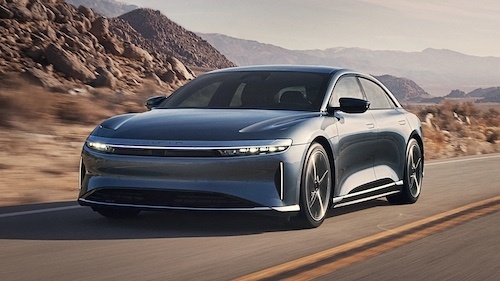
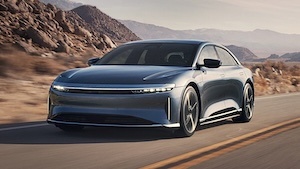
The Lucid Air Pure claims the #1 spot as the most efficient vehicle of 2026.
The folks over at MIT have put together interesting data showing the monthly costs and emissions (including upstream emissions for electric vehicles) of most mass-produced vehicles sold in the U.S. market over the last few years. It is worth a look to compare vehicles and emphasize the point that monthly costs for some electric vehicles are now comparable to hybrid and gas-powered vehicles. And, while the $7,500 federal electric vehicle tax credits were prematurely ended on 9/30/25 by the OBBBA legislation, a number of state electric vehicle tax credits and rebates could impact those economics even further.
All of that said – there are definitely a few vehicles on this list that should be considered off limits by all but the mega-rich with their price tags. With high-end EVs, mileage efficiency and vehicle cost efficiency are mutually exclusive. And, you’d have a hard time convincing me that any $50K+ depreciating asset is justifiable, especially when there are 8 sub-$40K EVs now in the market.
2026 Electric Vehicle MPGe Efficiency, Cost, & Other Metrics
For the specs listed below, vehicle efficiency (MPGe, or Miles Per Gallon equivalent), CO2 emissions (in grams/mile), and annual energy (electricity) cost metrics were gathered from the EPA’s fueleconomy.gov site. Upstream CO2 emissions are national averages (assuming the individual does not have their own electricity generated and is purchasing from a utility), and compare to a new vehicle average of 319 grams/mile (tailpipe + upstream). Annual energy costs listed are based on 45% highway, 55% city driving, 15,000 annual miles and $0.15 per kWh of electricity. For MSRP, I have listed the prices for base models (includes delivery) as provided by automaker.
Notes on the Ranking of the Most Efficient Vehicles for 2026
The Toyota bZ (#5) replaces the outgoing Toyota bZ4X on the list of the most efficient vehicles for 2026. It’s joined by the Lexus RZ 300e (#7), Mercedes-Benz CLA 250 Plus (#6), Tesla Model S (#8), and Nissan Leaf (#9), and Subaru Solterra (#10). Dropping off the list from last year are the aforementioned Toyota bZ4X (#5), Hyundai Kona EV (#6), BMW i4 eDrive 35 Gran Coupe (#7), Volvo EX30 (#8), Fiat 500e (#9), and Audi Q4 45 e-tron (#10).
The Most Efficient Vehicles in 2026 Sold in the US:
Here are the top 10 most efficient cars (vehicles) of 2026 sold in the United States, from #10 to #1.
10. Subaru Solterra AWD


- MSRP (before tax credits or other incentives): $39,945
- Engine: Electric Drive
- Combined MPGe: 120
- City MPGe: 131
- Highway MPGe: 109
- Annual Energy Cost: $650
- CO2 Tailpipe Emissions: 0 grams/mile
- Upstream CO2 Emissions (national average): 120 grams/mile
- Battery Range: 288 miles
9. Nissan Leaf (75 kWh)
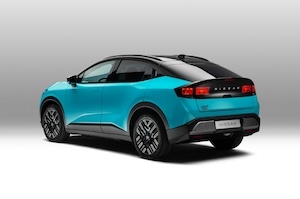

- MSRP (before tax credits or other incentives): $31,485
- Engine: Electric Drive
- Combined MPGe: 121
- City MPGe: 131
- Highway MPGe: 111
- Annual Energy Cost: $650
- CO2 Tailpipe Emissions: 0 grams/mile
- Upstream CO2 Emissions (national average): 119 grams/mile
- Battery Range: 303 miles
8. Tesla Model S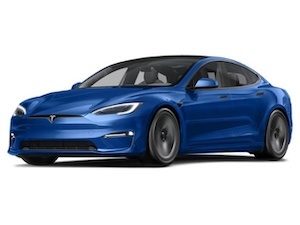

- MSRP (before tax credits or other incentives): $96,630
- Engine: Electric Drive
- Combined MPGe: 124
- City MPGe: 132
- Highway MPGe: 116
- Annual Energy Cost: $600
- CO2 Tailpipe Emissions: 0 grams/mile
- Upstream CO2 Emissions (national average): 116 grams/mile
- Battery Range: 410 miles
7. Lexus RZ 300e


- MSRP (before tax credits or other incentives): $47,295
- Engine: Electric Drive
- Combined MPGe: 125
- City MPGe: 137
- Highway MPGe: 112
- Annual Energy Cost: $600
- CO2 Tailpipe Emissions: 0 grams/mile
- Upstream CO2 Emissions (national average): 115 grams/mile
- Battery Range: 266 miles
6. Mercedes-Benz CLA 250 Plus
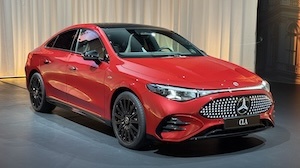

- MSRP (before tax credits or other incentives): $48,600
- Engine: Electric Drive
- Combined MPGe: 128
- City MPGe: 127
- Highway MPGe: 126
- Annual Energy Cost: $600
- CO2 Tailpipe Emissions: 0 grams/mile
- Upstream CO2 Emissions (national average): 116 grams/mile
- Battery Range: 512 miles
5. Toyota bZ
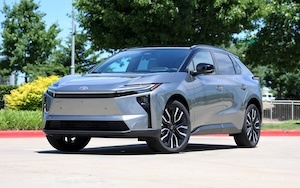

- MSRP (before tax credits or other incentives): $36,350
- Engine: Electric Drive
- Combined MPGe: 131
- City MPGe: 143
- Highway MPGe: 119
- Annual Energy Cost: $550
- CO2 Tailpipe Emissions: 0 grams/mile
- Upstream CO2 Emissions (national average): 122 grams/mile
- Battery Range: 314 miles
4. Hyundai Ioniq 6 – Standard Range
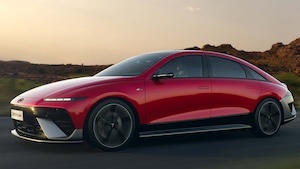
- MSRP (before tax credits or other incentives): $39,595
- Engine: Electric Drive
- Combined MPGe: 135
- City MPGe: 151
- Highway MPGe: 120
- Annual Energy Cost: $550
- CO2 Tailpipe Emissions: 0 grams/mile
- Upstream CO2 Emissions (national average): 129 grams/mile
- Battery Range: 240 miles
3. Tesla Model 3 – Long Range RWD
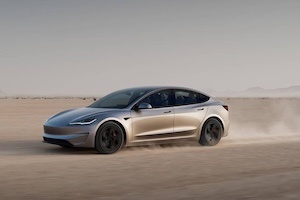

- MSRP (before tax credits or other incentives): $38,630
- Engine: Electric Drive
- Combined MPGe: 137
- City MPGe: 145
- Highway MPGe: 128
- Annual Energy Cost: $550
- CO2 Tailpipe Emissions: 0 grams/mile
- Upstream CO2 Emissions (national average): 106 grams/mile
- Battery Range: 363
2. Tesla Model Y – Standard Range RWD
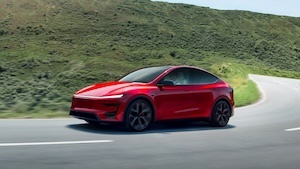
- MSRP (before tax credits or other incentives): $41,630
- Engine: Electric Drive
- Combined MPGe: 138
- City MPGe: 148
- Highway MPGe: 129
- Annual Energy Cost: $600
- CO2 Tailpipe Emissions: 0 grams/mile
- Upstream CO2 Emissions (national average): 105 grams/mile
- Battery Range: 337 miles
1. Lucid Air Pure RWD (with 19″ Wheels)
- MSRP (before tax credits or other incentives): $64,550
- Engine: Electric Drive
- Combined MPGe: 146
- City MPGe: 149
- Highway MPGe: 142
- Annual Energy Cost: $500
- CO2 Tailpipe Emissions: 0 grams/mile
- Upstream CO2 Emissions (national average): 99 grams/mile
- Battery Range: 420 miles