

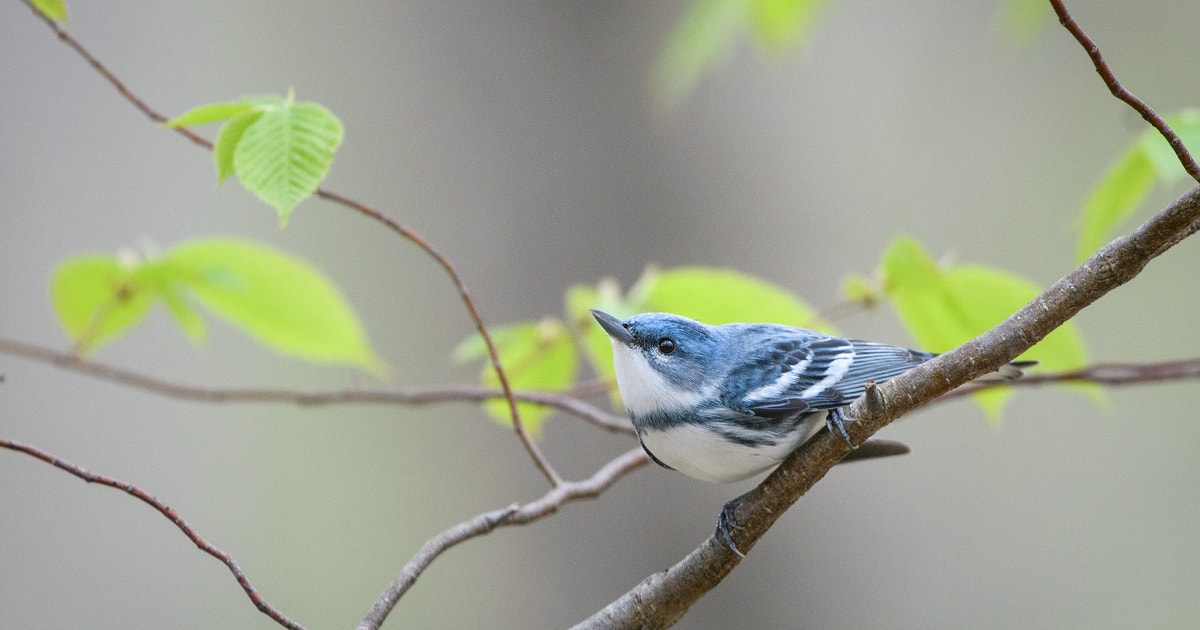
Each spring, Cerulean Warblers migrate north from South America, crossing the Gulf to spend their summer in the eastern United States and southern Canada. Like many bird species, their survival depends on connected habitats and coordinated efforts across different countries and communities. In this way, birds highlight how we can work together to advance climate action and conservation.
We are living through a challenging moment for birds, the planet, and people. Habitat loss and intensifying extreme weather are reshaping the places we love and depend on. Bird populations are facing an uncertain future with about two-thirds of North American bird species and more than 75 percent of Latin American forest bird species at risk if global temperatures continue to rise. Birds are indicators of the health of our environment. They also remind us that we are connected, and that when we act together, we can create meaningful change.
Conservation has always been a collective effort. For more than 120 years, Audubon has built broad coalitions informed by science and based on shared values like clean air and water, resilient communities, and thriving outdoor spaces. Our work has deepened locally and expanded across the Western Hemisphere to include countries in Latin America and the Caribbean, thanks to the strength of our partnerships and the hard work of Audubon chapters, staff, and passionate individuals. Our approach is guided by pragmatic optimism and a long-term commitment, grounded in the belief that the positive actions we take today will accumulate over time.
From Canada to Chile, our work to address climate change and biodiversity loss is powered by partnerships with local communities. In Canada, for example, Audubon collaborates with Indigenous governments and organizations like the Seal River Watershed Alliance on some of the most ambitious land conservation initiatives underway today. Through Conserva Aves, which is led by Audubon, BirdLife International, Birds Canada, American Bird Conservancy, and the Latin American and Caribbean Network of Environmental Funds (RedLAC), more than 2 million acres of bird habitat have been protected across eight Latin American countries, with local communities playing a central role in managing these new protected areas.
This approach to bird conservation is informed by Audubon’s community science programs like Climate Watch. For the last decade, Climate Watch volunteers have collected data that help researchers track how birds are responding to climate change and shifting their ranges. During the latest winter session of Climate Watch, students from the Claflin University campus chapter Friends of the Earth joined Audubon staff to count Eastern Bluebirds as part of the effort. Moments like this remind us that the next generation of environmentalists are already engaged and making meaningful contributions to conservation.
That same spirit of engagement extends to how people call for policies that benefit birds. For example, in support of a modernized Farm Bill, ranchers recently traveled to Capitol Hill to share firsthand how bird-friendly grazing supports healthy grasslands and working lands. By adding their voices and experiences to the conversation, these landowners made a compelling case for strengthening conservation incentive programs that benefit both birds and communities.
People are also shaping solutions on the ground in their local communities. In Arizona, a wildlife rehabilitation center partnered with a solar developer to relocate Burrowing Owls from a housing development site to an experimental habitat within a solar energy complex, using artificial burrows and ongoing monitoring. The project offers a promising example of how renewable energy projects can be planned with wildlife in mind to help support species that face challenges from development and climate impacts.
This kind of collaboration can be found in art as well. The Audubon Mural Project and partners recently helped draw attention to climate-threatened birds in New York City’s community gardens, where local artists painted more than 20 murals featuring bird species and the native plants they rely on for food and shelter.
At this pivotal moment for birds, hope and possibility lie at the intersection of science, durable solutions, and engaged communities. Together, we can work to reverse bird population declines and protect the places that sustain us all.
