


Ryan Haines / Android Authority
TL;DR
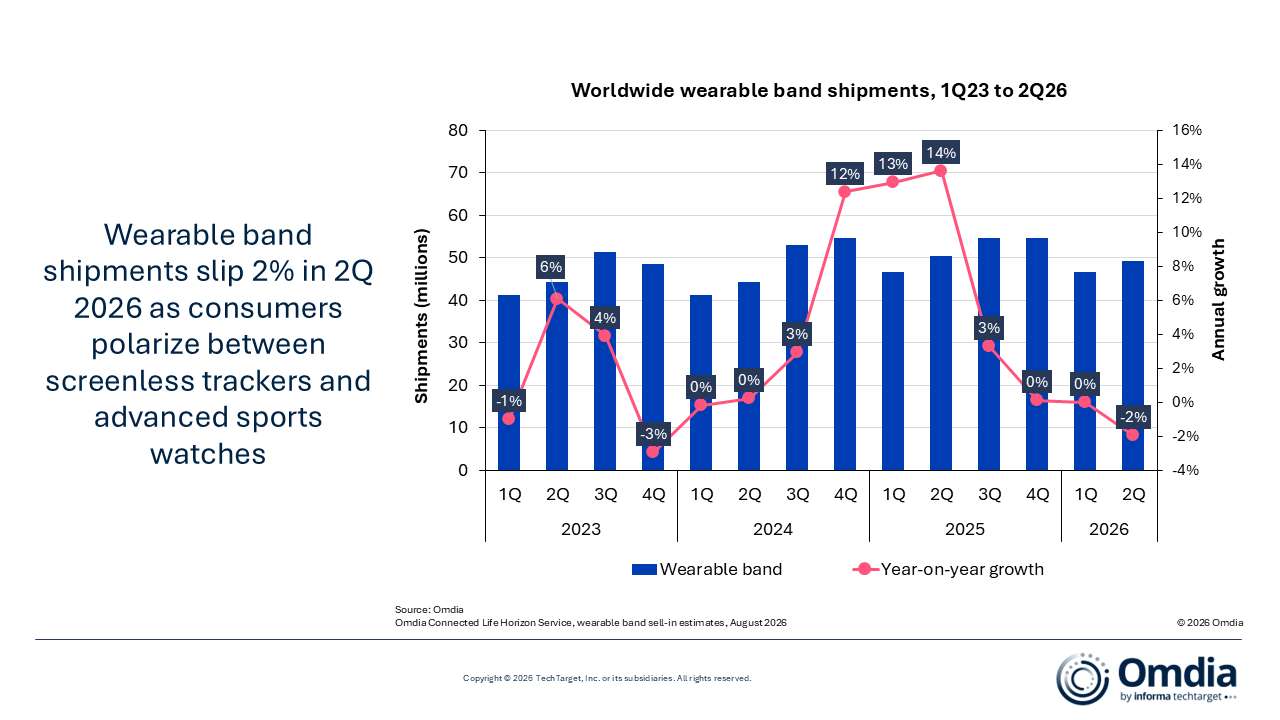
- Wearable shipments fell 2% year over year in Q2 2026, and consumers are increasingly choosing between premium sports watches and screenless trackers.
- Garmin gained major smartwatch market share, while Samsung and Apple both lost ground year over year.
- Screenless trackers are gaining momentum as consumers look for wearables that track their health without constant notifications and distractions.
Over the past several years, the wearable market has grown to be diverse and full of different options, and that might just be making consumers a lot more selective. Research firm Omdia has just published preliminary sales figures for the second quarter of 2026, and in addition to highlighting a decline in year-over-year shipments, it also spotlights a growing divide.
Overall wrist-based wearable shipments fell by 2% compared to the second quarter of 2025, but that decline doesn’t paint the full picture. The consumer market also seems to be split between two very different types of wearable bands: screenless trackers and the more sophisticated “feature-rich sports watches” from the likes of Garmin.
While screenless trackers gain ground, and the more advanced smartwatches maintain their popularity, basic and mid-tier smartwatches “are being left behind,” according to Jason Low, Research Director at Omdia. So it’s either a top-of-the-line, feature-rich experience on the wrist, or one that doesn’t bother you every time you get a social media update.

Garmin’s growth in the premium, feature-rich wearable category reveals consumers ready to spend more on devices that offer “accurate, advanced training data and translate it into actionable insights.” The data shows that Garmin now commands 15% of smartwatch market share, up from 11% year over year.
On the other end, screenless trackers accounted for more than 15% of shipments in the basic band category during the quarter. That’s impressive, especially considering that the category declined by 9% year over year.
The appeal is clear here: no constant notifications, no temptation to check messages and reply back, and no tiny display to steal your attention.
Popularized in recent years by WHOOP, alternatives like Google’s Fitbit Air accounted for a significant portion of the screenless device shipments during the quarter. Garmin subsequently released its own take on the screenless tech in the form of the Cirqa, though considering that it was released in July, it didn’t have any impact on the Q2 figures.
Market leaders are feeling the pinch too
And then there’s the middle ground — manufacturers here only maintained or lost market share, with even the biggest players not being immune to the shift.
Apple still dominates the overall smartwatch market, even though its market share fell from 48% to 46% year over year. Samsung also suffered a 2-percentage-point decline in its smartwatch market share, going from 17% to 15%, drawing level with Garmin.
Similarly, Samsung wearable band market share fell from 9% to 6%, again coming in even with Garmin. It’s worth noting that these figures don’t include sales for the Garmin Cirqa, which will likely push the company’s market share even higher and make the next few quarters particularly interesting, especially with consumers now being more selective about what kind of wearable they want.
Thank you for being part of our community. Read our Comment Policy before posting.

