

More than 150 years ago, Frederick Billings returned to Vermont after making his fortune during the California Gold Rush where he had witnessed miners clearing forests, eroding hillsides, and leaving rivers diverted and polluted. The experience helped him recognize that the familiar Vermont landscape of his youth had suffered similarly, with much of the state’s original forest already cleared for agriculture and sheep pasture. What seemed normal was, in fact, a degraded landscape—a realization that inspired Billings to become one of the nation’s earliest advocates for forest restoration.
Since more than half of America’s forests are privately owned, the same principle that guided Billings remains relevant today: healthy forests depend on long-term stewardship. Every five years, Congress reauthorizes a new Farm Bill, one of the nation’s primary drivers of agricultural and conservation policy. Through the version currently making its way through Congress—the Farm, Food, and National Security Act of 2026—lawmakers can strengthen programs that help private landowners conserve forests, improve habitat for birds and wildlife, and keep working forests healthy and resilient.
America’s private forests provide far more than timber. They filter drinking water, support outdoor recreation, store carbon, sustain rural economies, and provide habitat for hundreds of bird and wildlife species. Yet these forests face growing pressures from development, fragmentation, invasive species, pests, disease, and increasingly severe wildfires. Forest conservation programs included in the Farm Bill can help ensure these landscapes remain healthy, productive, and resilient for generations to come.
The Farm Bill has long recognized that conservation works best when landowners have the tools and resources they need to be successful stewards. Recognizing that for many landowners, ecological outcomes such as habitat for birds and other wildlife are among their top priorities, the Natural Resources Conservation Service has worked closely with Audubon through the Environmental Quality Incentives Program (EQIP) to develop new forestry practices supported by the Farm Bill. These practices help landowners implement on-the-ground, non-commercial activities that enhance habitat for a diverse suite of forest nesting bird species; from Black-throated Blue Warblers to White-throated Sparrows.
Several new forestry provisions under consideration would strengthen that support. The Forest Conservation Easement Program (FCEP) would help keep working forests intact by preventing fragmentation and development while allowing sustainable forestry to continue. Conserving large, connected forest landscapes benefits wildlife, protects water resources, and helps maintain the economic value of working forests. For many bird species, intact forests provide the breeding, nesting, and migratory habitat they need to survive. Congress can also provide private forest landowners with consistent access to the technical and financial assistance needed to keep working forests sustainable and economically viable by permanently authorizing the Forest Landowner Support Program. Together with the Forest Conservation Easement Program, the program would help landowners conserve, manage, and restore forests that support birds, wildlife, clean water, and rural economies.
The Farm Bill also supports collaborative approaches to forest management run by the U.S. Forest Service and recognizes that ecological challenges do not stop at property boundaries. The Good Neighbor Authority, expanded nationwide as part of the 2014 Farm Bill, enables state forestry agencies and other partners to work alongside federal land managers on projects that improve forest health, reduce hazardous fuels, restore watersheds, and enhance wildlife habitat. With appropriate implementation, it has become an increasingly important tool for addressing landscape-scale challenges such as wildfire risk, invasive species, and watershed degradation. Forests are interconnected systems, and their health often depends on coordinated management across public and private lands.
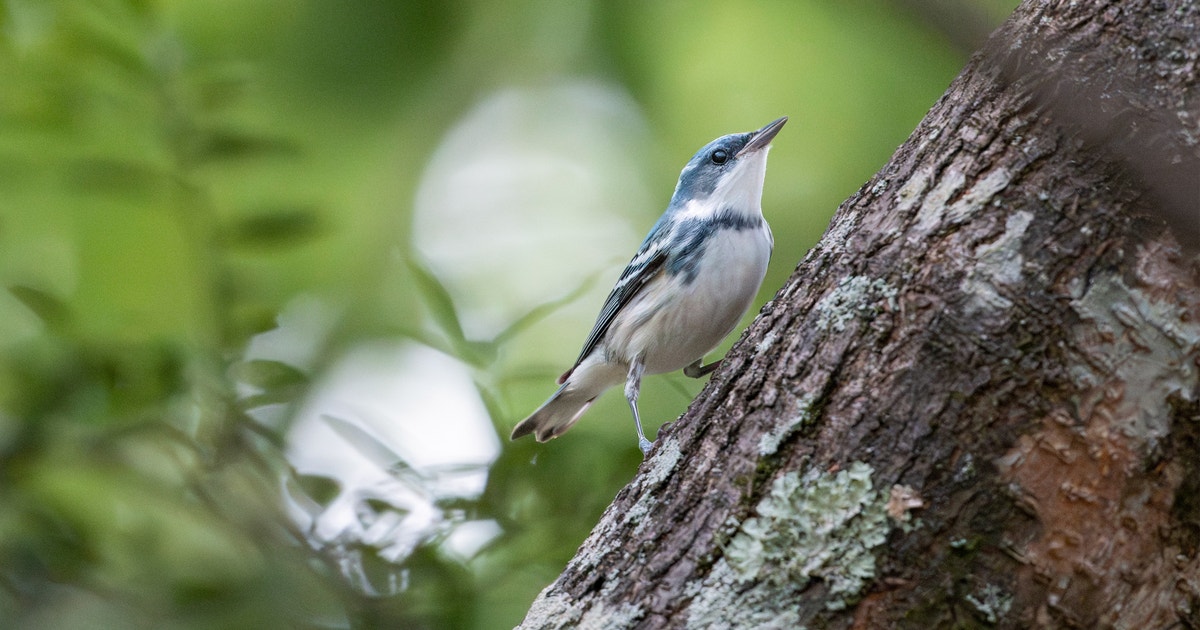
Birds are one of the clearest indicators of forest health because they depend on the structure, diversity, and condition of the habitats around them. For birds, the benefits of strong forest conservation programs are substantial. Forest habitats support hundreds of species across the country, from Wood Thrushes and Cerulean Warblers in eastern hardwood forests to Western Tanagers in the Sierra Nevada. Yet many forest birds continue to face population declines driven by habitat loss and degradation. Conserving large, healthy forests and supporting proactive stewardship are essential to reversing these trends.
Frederick Billings believed conservation and economic productivity could work hand in hand, and that private landowners could play a leading role in restoring and sustaining healthy landscapes. His former estate in Woodstock, Vermont is now preserved as the only national park dedicated to the history of conservation in America. Today’s Farm Bill forest programs carry that same vision forward. The Farm Bill offers an opportunity to address those challenges before today’s diminished conditions become tomorrow’s accepted baseline. By investing in private forest stewardship, Congress can help ensure America’s forests remain healthy, connected, and resilient for future generations.
