

Why I Compile a List of the Cheapest Electric Vehicles
This article will rank the cheapest new electric vehicles in 2026 sold in the U.S. market (as of Jan., 2026), including a few prior year releases that are still for sale this year. For those not paying close attention, it’s been an insanely unstable past year for EVs. EVs had their 2nd best sales year ever in 2025, trailing only 2024 (by just 2%) – to finish at ~8% of U.S. market share. Not bad considering that the up to $7,500 federal electric vehicle tax credit that the industry built around was completely, prematurely, and indefinitely eliminated for all EVs sold after 9/30/25 (note: some state electric vehicle tax credits still exist).
In light of the EV tax credit expansion in 2021, almost every major automaker had put forward tens of billions of dollars in investment towards building an EV-powered future – and, they were starting to deliver on it with dozens of new model releases every year. After the EV credit elimination, automakers were taking billions of dollars in losses while scaling back their EV investment to instead shift their focus back to internal combustion and hybrid drivetrains.
I don’t know if that was a smart move. People who have purchased their EVs love them. According to a J.D. Power survey, 94% of EV owners are likely to consider purchasing another EV for their next vehicle (and 1 survey even found less than 1% would go back to a gas vehicle). EVs are still slightly higher in cost than their gas counterparts, but with battery prices dropping quickly ever year, there will be a time in the very near future when that will flip. When we hit that point, mass EV adoption seems inevitable. But for now, even after the EV tax credit got axed, EVs are still competitive.
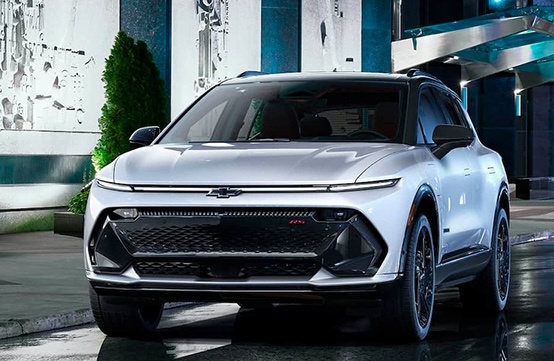
Many EVs are Still Affordable for the Mass Market
I’ve always been a fuel economy geek and have kept a watchful eye on the most efficient vehicles over the past decade plus. When I first started compiling that list, every single vehicle was a gasoline-electric hybrid (primarily gasoline-powered with a tiny electric-only range, e.g. the original Toyota Prius) or simply a small, efficient gas-powered vehicle with a tiny combustion motor. Today, every vehicle on that list is 100% powered by electric batteries only. That will be the case for the next few decades, until hydrogen or another yet to be imagined power source technology overtakes electricity.
What had always bothered me with electric vehicles in the past, however, was the astronomical prices of many of those vehicles. This is a personal finance website, after all, and transportation costs have quietly become the second highest expense category per household in the U.S., on average. This is why I’ve also kept track of the cheapest new cars (none of which are currently electric).
The total cost of ownership continues to tilt in the favor of electric vehicles, with the ongoing cost of ownership of electric vehicles being lower than gasoline-powered vehicles and the power efficiency of electricity versus gasoline. With a little luck in dealer offers and/or negotiation, even without the federal EV tax credit, it’s still possible to come out ahead in total ownership costs with an EV (versus internal combustion).
New Cheap(ish) Electric Vehicles Launching in 2026
If this list of the cheapest electric vehicles in 2026 was made at the end of the year, instead of the beginning, it might look quite different. At the very least, the Kia EV4 should make the list. Kia is taking pre-orders for 2026, but a launch date is not yet certain. The expected MSRP of $37,500 would put it firmly on the list of the 10 cheapest EVs. And it looks a lot more appealing than other Kia and sister-brand Hyundai’s EVs.
Falling off from last year’s list of the cheapest EVs are the following:
- #10: Nissan Ariya: model discontinued in favor of the relaunched Leaf.
- #9: Kia Niro: price increase.
- #6: Ford Mustang Mach-E: price increase.
- $5: Toyota bZ4X: replaced with Toyota bZ.
New additions are:
- #8: Tesla Model 3: price decrease.
- #7: Hyundai Ioniq 5: price decrease.
- #5: Toyota bZ: replaces the bZ4X.
- #1: Chevy Bolt: relaunched in 2026.
Electric Vehicle Price Ranking, Efficiency, Range, & Other Metrics
For the specs listed in the ranking below:
- efficiency (MPGe, or miles per gallon equivalent), CO2 emissions (both tailpipe and upstream), and annual energy (electricity) cost metrics were gathered from the EPA’s fueleconomy.gov site.
- Upstream (non-tailpipe) CO2 emissions are national averages (assuming the individual does not have their own electricity generated and is purchasing from a utility), and is comparable to a new gasoline-powered vehicle’s upstream and tailpipe average emissions of about 400 grams/mile.
- Annual energy costs listed are based on 45% highway, 55% city driving, 15,000 annual miles and $0.15 per kWh of electricity.
- For MSRP, I have listed the base price (including destination charges) prior to any state tax credits. These prices are direct from the automaker.
The 10 Cheapest Electric Vehicles of 2026 Ranking (in the U.S. Market):
Here are the top 10 cheapest electric vehicles of 2026 sold in the U.S. market, ranked from #10 to #1.
10. Subaru Solterra

- Base Electric Model: Subaru Solterra Premium
- Base MSRP (before tax credits or other incentives): $39,945
- Combined MPGe: 120
- City MPGe: 131
- Highway MPGe: 109
- Annual Energy Cost: $650
- CO2 Tailpipe Emissions: 0 grams/mile
- Upstream CO2 Emissions (national average): 120 grams/mile
- Battery Range: 288 miles
- Overview: the Subaru Solterra is a bit underrated, in my view. AWD is standard, 288 miles of range is solid, and the efficiency is there. While it’s not the cheapest EV out there, the pricing is competitive, and people love their Subarus.
9. Hyundai Ioniq 6
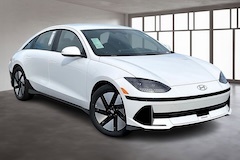
- Base Electric Model: Hyundai Ioniq 6 SE RWD
- Base MSRP (before tax credits or other incentives): $39,595
- Combined MPGe: 114
- City MPGe: 129
- Highway MPGe: 100
- Annual Energy Cost: $700
- CO2 Tailpipe Emissions: 0 grams/mile
- Upstream CO2 Emissions (national average): 129 grams/mile
- Battery Range: 318 miles
- Overview: technically the Ioniq 6 currently for sale in the U.S. market in 2026 is the 2025 model, which will likely roll over to 2026. A new trim with a more powerful battery is expected later in the year. Solid range, but it’s not the most visually appealing EV on the market.
8. Tesla Model 3
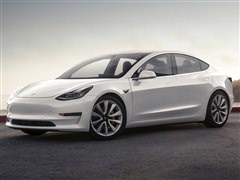
- Base Electric Model: Tesla Model 3 Standard RWD
- Base MSRP (before tax credits or other incentives): $38,630
- Combined MPGe: 137
- City MPGe: 145
- Highway MPGe: 128
- Annual Energy Cost: $550
- CO2 Tailpipe Emissions: 0 grams/mile
- Upstream CO2 Emissions (national average): 106 grams/mile
- Battery Range: 321 miles
- Overview: the Tesla Model 3 has been out-shined, out-valued, and out-sold by its sister model, the Model Y, but it’s still the 2nd best selling EV in the U.S. market. And with 321 miles of range, crazy high efficiency, and and a competitive price, it’s easy to see why.
7. Hyundai Ioniq 5
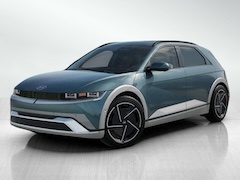
- Base Electric Model: Hyundai Ioniq 5 SE RWD
- Base MSRP (before tax credits or other incentives): $36,600
- Combined MPGe: 115
- City MPGe: 131
- Highway MPGe: 100
- Annual Energy Cost: $650
- CO2 Tailpipe Emissions: 0 grams/mile
- Upstream CO2 Emissions (national average): 129 grams/mile
- Battery Range: 245 miles
- Overview: Hyundai moved production of the Ioniq 5 to Georgia last year, just in time for… the EV tax credits for U.S. made EVs getting slashed. Whoops. Slightly disappointing range on this model.
6. Chevy Equinox EV
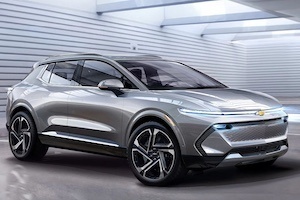
- Base Electric Model: Chevy Equinox EV LT
- Base MSRP (before tax credits or other incentives): $36,495
- Combined MPGe: 108
- City MPGe: 117
- Highway MPGe: 100
- Annual Energy Cost: $700
- CO2 Tailpipe Emissions: 0 grams/mile
- Upstream CO2 Emissions (national average): 133 grams/mile
- Battery Range: 319 miles
- Overview: last year, I said “GM is going to sell a lot of Equinox EVs in 2025”. They did. The Equinox EV was the 3rd highest selling EV last year, trailing only the Tesla Model 3 and Model Y. It’s not hard to see why with 319 miles range, good looks, and competitive pricing.
5. Toyota bZ
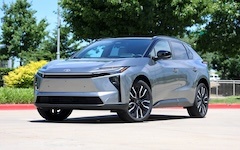
- Base Electric Model: Toyota bZ XLE
- Base MSRP (before tax credits or other incentives): $36,350
- Combined MPGe: 131
- City MPGe: 143
- Highway MPGe: 119
- Annual Energy Cost: $550
- CO2 Tailpipe Emissions: 0 grams/mile
- Upstream CO2 Emissions (national average): 110 grams/mile
- Battery Range: 314 miles
- Overview: the Toyota bZ replaces the outgoing bZ4X in 2026. While they look (and sound) fairly similar, they aren’t the same vehicle. The bZ starts with 314 miles of range (versus the bZ4X’s 252). The bZ also boasts higher efficiency and has a new interior, including a 14″ screen. On the surface, the bZ seems like a much better value than its predecessor.
4. Hyundai Kona Electric
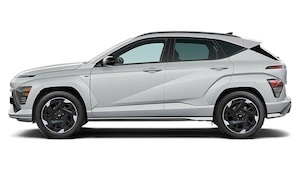
- Base Electric Model: Hyundai Kona Electric SE
- Base MSRP (before tax credits or other incentives): $32,975
- Combined MPGe: 118
- City MPGe: 131
- Highway MPGe: 105
- Annual Energy Cost: $650
- CO2 Tailpipe Emissions: 0 grams/mile
- Upstream CO2 Emissions (national average): 125 grams/mile
- Battery Range: 200 miles
- Overview: there has been speculation that the Hyundai Kona EV will consolidate all of its trims into 1 at some point in 2026, but that hasn’t happened yet. For now, last year’s models are still for sale, and with the base model having only 200 miles of range, it’s more than a little underwhelming in the marketplace. We’ll see what the future holds.
3. Fiat 500e

- Base Electric Model: Fiat 500e
- Base MSRP (before tax credits or other incentives): $32,495
- Combined MPGe: 116
- City MPGe: 127
- Highway MPGe: 104
- Annual Energy Cost: $650
- CO2 Tailpipe Emissions: 0 grams/mile
- Upstream CO2 Emissions (national average): 125 grams/mile
- Battery Range: 149 miles
- Overview: I’m not quite sure what is going on with the Fiat 500e, to be perfectly honest. It looks like last year’s model is still for sale and will likely be carried over to 2026, with no expected improvements. A vehicle of this size having only 149 miles range is pretty sad. I’d pass on this one. Despite being the 3rd cheapest EV, the value prop is clearly not there.
2. Nissan Leaf
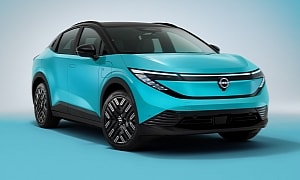
- Base Electric Model: Nissan LEAF S (75 kWh)
- Base MSRP (before tax credits or other incentives): $31,485
- Combined MPGe: 121
- City MPGe: 131
- Highway MPGe: 111
- Annual Energy Cost: $650
- CO2 Tailpipe Emissions: 0 grams/mile
- Upstream CO2 Emissions (national average): 119 grams/mile
- Battery Range: 303 miles
- Overview: the 2026 Nissan Leaf is back with some major upgrades and a complete redesign. Nissan killed off the Ariya model and turned the Leaf from a small hatchback into a compact SUV of sorts. The redesign comes with a slight price increase, but efficiency picks up and range more than doubles from 149 to 303 miles on the base model. The Leaf had become noncompetitive in the marketplace, but post remake, it looks like a high-value winner.
1. Chevy Bolt EV
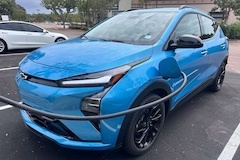
- Base Electric Model: Chevy Bolt EV LT
- Base MSRP (before tax credits or other incentives): $28,595
- Combined MPGe: TBD
- City MPGe: TBD
- Highway MPGe: TBD
- Annual Energy Cost: TBD
- CO2 Tailpipe Emissions: 0 grams/mile
- Upstream CO2 Emissions (national average): TBD
- Battery Range: 255 miles
- Overview: pre-hiatus the Chevy Bolt had developed a cult-like following. Now, it’s back, and it re-enters the U.S. market as the cheapest EV in 2026 (and the only EV with a sub $30K base price). Despite already hitting some dealer lots in 2026, the Bolt is being sold as a “2027” model. Compared to its sister, the Chevy Equinox, I’m not quite sure that the Bolt still has the same value prop that it used to, but as the cheapest EV in the U.S., it will make some commuters happy.
