

I recently spent some time on the Bird Migration Explorer website, and it got me thinking about some of the interesting connections between bird breeding habitat in the Arctic and the far-off locations that birds travel to across the hemisphere.
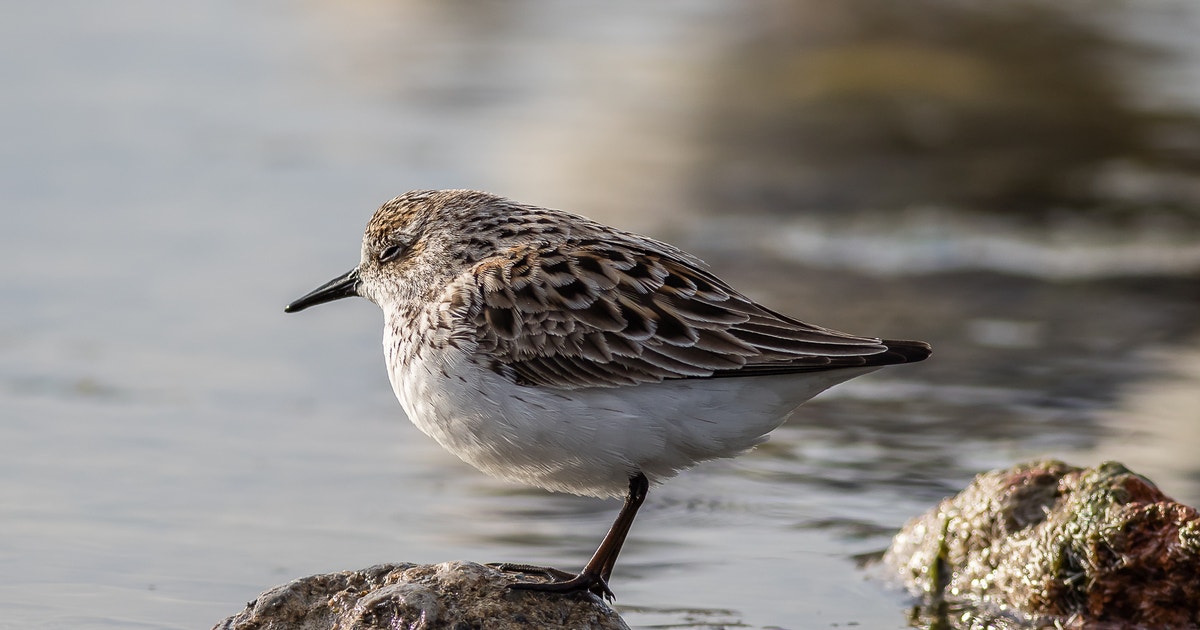
One that comes to mind involves the Semipalmated Sandpiper, a small shorebird with brownish-tan upperparts, white underparts, and black bill and legs. During north and south migration, small flocks of these birds can be found picking and probing for tiny crustaceans on mud flats, sandy beaches, and in shallow salt marsh pools. Semipalmated Sandpipers breed in the Arctic and subarctic south to Hudson Bay and James Bay. Then most travel south to coastal Brazil and Peru to spend the non-breeding season.
Last May, researchers on the coast of Georgia tagged some of these birds with MOTUS tags. A number of them were registered in early June as they migrated north past MOTUS towers in the Seal River Watershed of northern Manitoba, a 12-million-acre watershed that four First Nations are working to protect, together with the governments of Manitoba and Canada. One of these Semipalmated Sandpipers was detected the following August at a MOTUS station 1,500 miles away—at Petit Manan Point in Washington County, Maine!
This is just one of the many connections you can find when you start investigating birds and their amazing migrations. In September 2025 at the MOTUS station located at the National Audubon camp at Hog Island in Bremen, Maine, a White-rumped Sandpiper was detected. This bird was captured and tagged in July in the Arctic at a place called Prince Charles Island, just off the West Coast of Baffin Island (Qikiqtaaluk). Ebird checklists from the island show that this White-rumped Sandpiper was surrounded by other cool birds like King Eiders, Long-tailed Ducks, Brant, and Sabine’s Gulls all season. And most certainly, polar bears were wandering by.
This bird then flew south, eventually making its way 1,700 miles to the coast of Maine. Although we don’t have more tag registrations of this bird, we know that White-rumped Sandpipers travel all the way to the southern coast of South America to spend several months in the warmth of the Southern Hemisphere summer.
American Golden-Plovers also have an amazing migration story, which connects them to locations across the hemisphere. If you look up this bird on the Bird Migration Explorer, you will see them in the Arctic of Alaska and Canada where they come to nest and breed. You will also see that unlike many other Arctic breeding shorebirds, some American Golden-Plovers also breed much further south in the Arctic-like environment of western Hudson Bay. The Mushkegowuk Council, which represents a group of First Nations in northern Ontario, is working on massive large-scale conservation that would protect this important habitat along the Ontario portion of Hudson and James Bays. This includes a proposal for a 22-million-acre marine protected area adjacent to the coast of Ontario.
Snow Buntings are sometimes called ‘Snowflakes,’ and rightfully so. Flocks of Snow Buntings can appear like swirling snow as they spiral through the air before settling on winter fields. South of the Arctic these beautiful songbirds are only seen late in the year and only for a few months. That’s what makes it such a treat when birdwatchers across southern Canada and in several northern US states are able to catch a glimpse of these birds foraging around on the ground near crop stubble or along lakeshores.
As the months start to warm, Snow Buntings in the U.S. and southern Canada return north to the tundra, breeding from northern Alaska, across the northernmost islands of Canada and along the coast of Greenland. In high-Arctic communities, Snow Buntings mark the return of spring. While most nest in rock crevices, others near human communities will make use of nooks and crannies in buildings and refuse and even in birdhouses put out for them by community members. Snow Buntings are included on the list of Common Birds in Steep Decline and their decreasing numbers are concerning.
Whether they start their southern migration in the high-Arctic or along Hudson Bay, birds find refuge in locations across the US where they either stay during the non-breeding season or rest and refuel before traveling much further south to their destinations in Central and South America, places like Mexico, Panama, Colombia, and Chile.
Because the Arctic is so important for these species and many others, the need to protect the region is critical for their survival. There are some inspiring conservation initiatives going on in the Arctic region of Canada led by Inuit governments and leaders. One of these is the Nunavut Land-Use Plan that, if finalized, would be one of the world’s most significant conservation achievements. And recently, the Qikiqtani Inuit Association announced it had formally begun implementation of the Sinaa conservation agreement that will eventually result in conservation of tens-of-millions-of-acres of lands and waters in the Qikiqtani region of Nunavut.
Isn’t it fascinating to see how these bird ambassadors demonstrate the shared responsibilities we have with peoples and governments around the world? What happens in the Arctic doesn’t stay in the Arctic, and that’s a beautiful thing!
